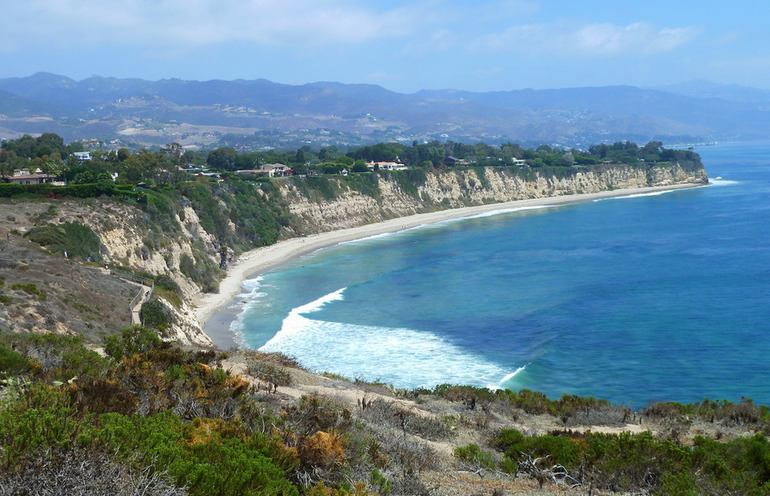
How to Visit Point Dume Nature Preserve
Point Dume Nature Preserve sits on the headland that marks the northern end of Santa Monica Bay, and the view from the bluff is one of the most spectacular on the Southern California coast. On a clear day, you can follow the Malibu shoreline toward Santa Monica, look inland to the Santa Monica Mountains, and pick out Catalina Island on the horizon. The preserve itself is small—about 32 to 34 acres of protected coastal bluff, designated a State Natural Preserve in 1992—yet it includes a summit walk, a sheltered boardwalk overlook, steep beach stairs, and two very different coves in a short visit.
Stay on the fenced paths. This protected landscape of coastal bluff scrub and an ancient dune is vulnerable, and leaving the trail speeds erosion on cliffs that already drop sharply to the ocean. Watch children at every overlook. The preserve is free, open from sunrise to sunset, and easy to underestimate: parking is scarce, facilities are almost nonexistent on the bluff, and the stairs to the sand are a workout both ways.
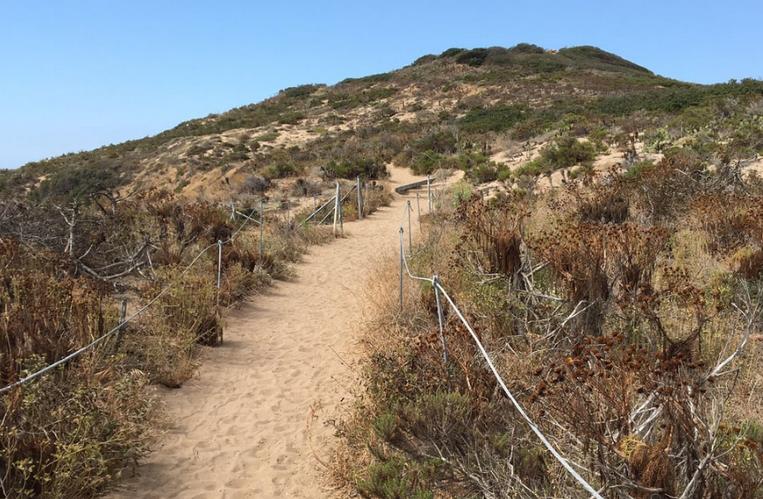
Hike the Summit Trails and Boardwalk Overlook
From the small turnout on Cliffside Drive, short signed paths—often called the Poppy Trail and Coreopsis Trail—lead onto the headland. The walk is brief. Most people cover the bluff loop in 30 to 60 minutes, with only a modest climb. The payoff is the lookout just below the summit, where a boardwalk leads to a viewing platform a little lower than the wind-blasted top. That platform is the place to sit, scan Santa Monica Bay, and wait for wildlife.
Gray whales pass this point during the December to mid-April migration, often close enough to spot from the bluff without binoculars, though binoculars help. Sea lions and harbor seals haul out on the rocks below. Bottlenose dolphins work the kelp line on many afternoons. In spring, giant coreopsis and other bluff plants put on a short, bright show.
The trails are fenced for a reason. Off-trail shortcuts cut new grooves in loose sand and destroy habitat that migrating birds and small wildlife still use. Dogs are not allowed in the preserve. There are no restrooms, water fountains, or shade structures on the bluff, so bring water and a layer. The point is exposed, and the wind can turn a warm Malibu morning cold in minutes.
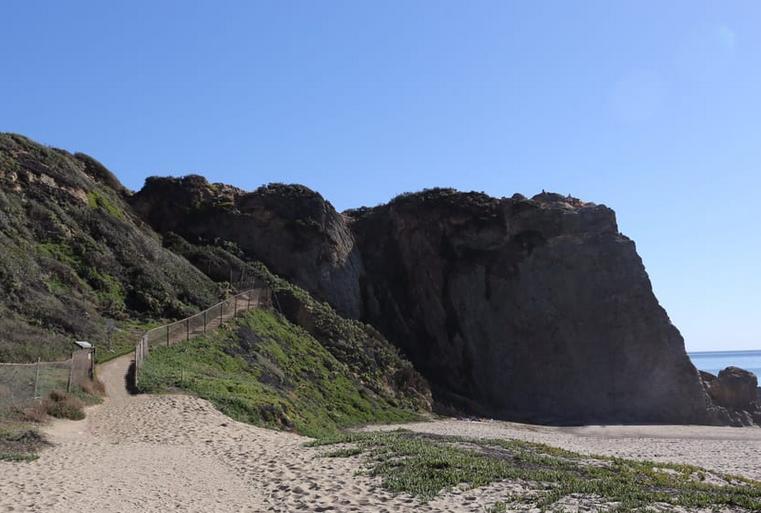
Descend to Dume Cove for Tide Pools and Quiet Sand
From the summit paths, a separate route drops down a long, steep stairway to Dume Cove, also called Big Dume Beach. The sand here feels farther away than the map suggests. Because the access is a climb, the cove stays quieter than Zuma even in summer, especially on weekday mornings.
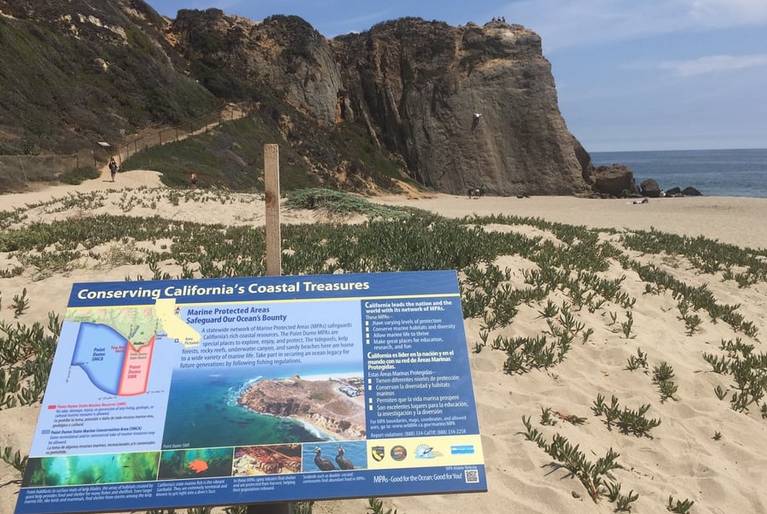
Tide pools collect near the base of the stairs. At a good low tide, you may see crabs, mussels, anemones, sea stars, and small fish in the rocks. Do not turn animals over or pry anything loose; the waters off the point are part of the Point Dume State Marine Reserve and State Marine Conservation Area, which protect kelp forest, rocky reef, and a deep submarine canyon just offshore.
Check a tide chart before you commit to the stairs. Higher tides shrink the usable beach and can cut off walking routes toward Little Dume and Paradise Cove. The return climb is the part people remember. If stairs are a problem, skip the descent. The view from the platform is the main reason to come, and it does not require the beach.
From Dume Cove, a longer beach walk can continue east toward Little Dume and, at lower tides, onward toward Paradise Cove. That extension turns a short overlook stop into a half-day outing. Wear shoes with grip. The bluff trails are compacted and manageable; the beach approach is sand, rock, and wet stone.
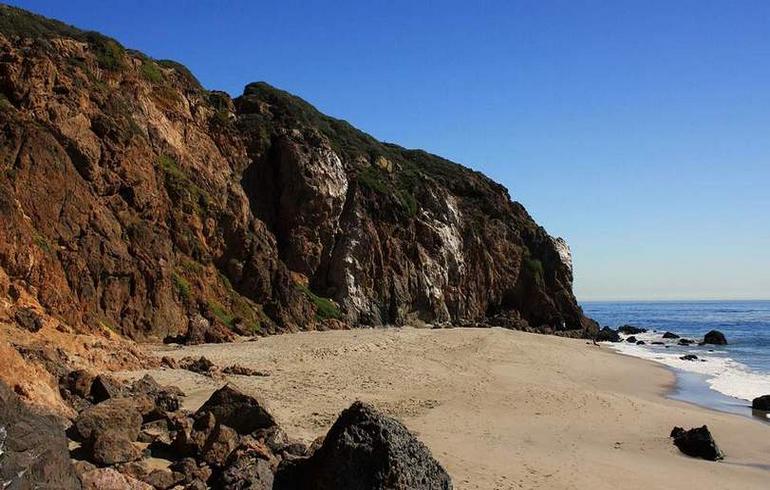
Pirates Cove and the Planet of the Apes Finale
On the west side of the point, a small pocket of sand known as Pirates Cove sits below the cliffs. This is the cove used for the final reveal in the original Planet of the Apes (1968), where Charlton Heston’s Taylor comes upon the ruined Statue of Liberty. The beach party in The Big Lebowski was shot nearby on Westward Beach, and the headland has turned up in plenty of other film and television work because the cliffs read as “end of the world” without leaving Los Angeles County.
Reaching Pirates Cove is not the same as walking the preserve loop. The usual approach is from the south end of Westward Beach, around or over the rock jumble at the point, and that route depends on the tide. When the swell is up, do not try to thread the boulders. Look down on the cove from the bluff instead.
Other Planet of the Apes interiors and sets were built at Malibu Creek State Park, including Ape City beside Century Lake. The old M.A.S.H. site is still visible there if you want a second movie-location stop on the same day.
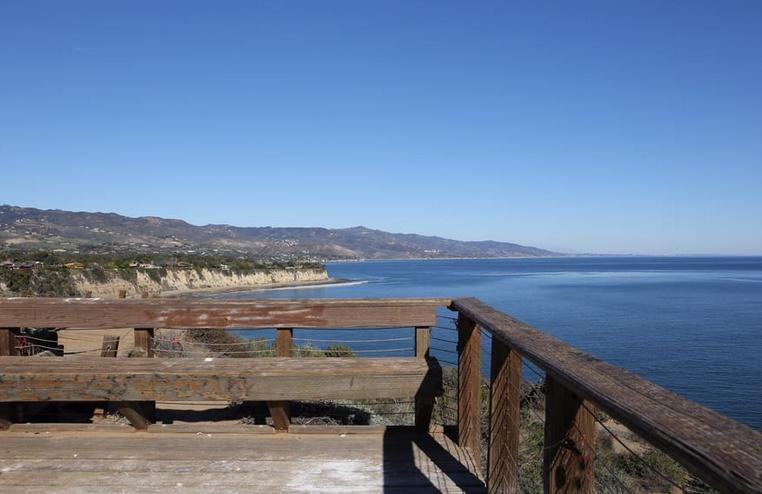
The Pacific Coast Highway Drive to Point Dume
The preserve is the northern tip of Santa Monica Bay, about 18 miles west of Santa Monica on Pacific Coast Highway. The drive is part of the outing. P.C.H. threads past beach houses, public sands, and the long Malibu shoreline, with new angles on the water at almost every bend. Expect slow traffic on weekends and plenty of cameras at the pullouts.
From Santa Monica, stay on P.C.H. until Westward Beach Road, then turn toward the ocean. From the 101, exit Kanan Road, follow it south about 12 miles to P.C.H., and turn right; Westward Beach Road is just over the rise. The preserve trail from the beach starts at the cul-de-sac at the end of Westward Beach Road. The bluff-top trailheads sit on Cliffside Drive, in the residential streets above the point.
Coastal weather and erosion change access here. In 2026, high surf damaged Westward Beach Road beyond the pay gate and forced closures of the beach parking lot and some restrooms. Before you go, check Los Angeles County Beaches and Harbors and California State Parks for the latest road, lot, and trail status. The sand itself is often still reachable on foot even when the lot is shut; the bluff-top preserve is a separate access point.
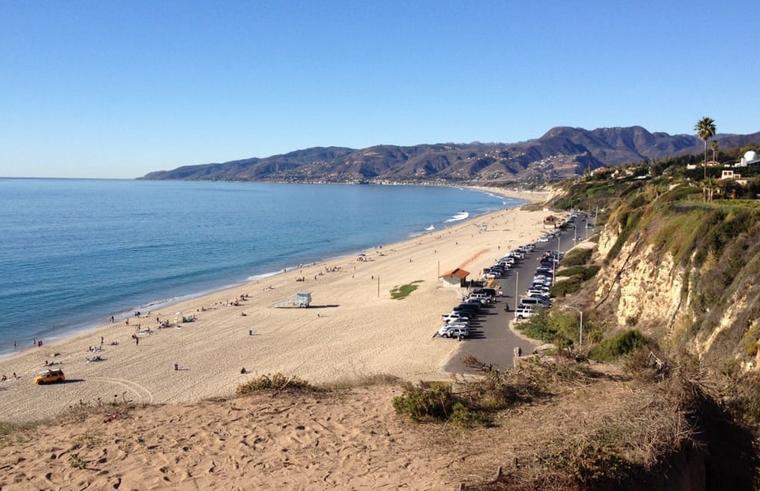
Parking and How to Reach the Preserve
The bluff lot on Cliffside Drive is tiny—roughly 10 to 15 spaces, including a few accessible stalls—and posted for two-hour parking. It fills early on weekends and sunny weekdays—Park only in marked spaces. The surrounding streets are posted no-parking; enforcement is consistent, and tickets are common. Homes on the point are private. Do not block driveways or idle in front of gates.
Westward Beach is the more reliable plan. When the lot is open, it is a paid facility with far more capacity, restrooms, and showers. Free roadside parking along Westward Beach Road is another option when spaces remain. From that beach, a steep trail climbs to the preserve. On some weekends, holidays, and summer days, a free shuttle has run between Westward Beach Road and the preserve trailhead; service varies, so treat it as a bonus rather than a guarantee.
Nearby Stops: Zuma Beach, Neptune’s Net, and Paradise Cove
Zuma Beach sits immediately northwest of the point and is the easy add-on if you want a long run of sand after the hike. It is one of the widest, cleanest public beaches in Los Angeles County, with about three miles of shoreline, lifeguards, a large lot, and room for swimming, surfing, and walking. Weekdays feel open; summer weekends do not.
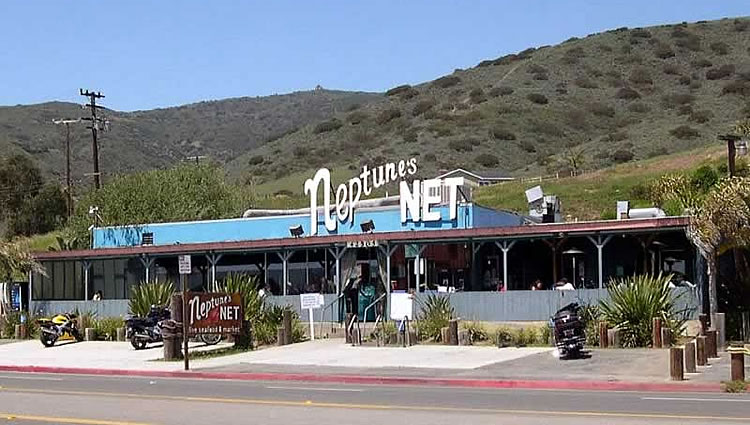
Neptune’s Net, a few miles west on P.C.H. at County Line, has served seafood since the 1970s and shows up in Point Break and The Fast and the Furious. It is casual, crowded at peak hours, and a natural lunch stop if you are continuing up the coast.
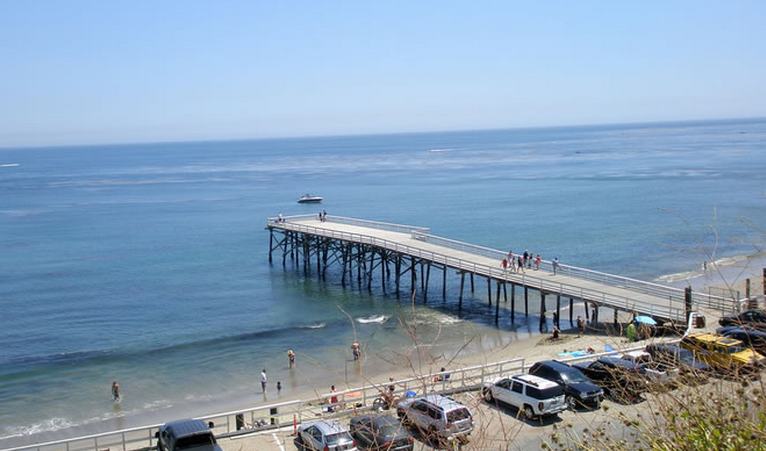
Paradise Cove, east of Dume Cove, began as a mid-century trailer and RV camp and is now a mix of private mobile homes and a public beach with a café and pier. Some of those trailers sell for prices that would buy a house inland. You can walk toward the cove from Dume Beach at lower tides, or drive in and pay for parking if you want the restaurant.
What to Bring and How Long to Stay
A first visit works as a one- to two-hour stop: park, walk the bluff, sit on the platform, and photograph the coast. Add an hour if you take the stairs to Dume Cove, and half a day if you connect Westward Beach, Pirates Cove (when tides allow), and the walk toward Paradise Cove.
Pack water, sun protection, and shoes you can hike in. The bluff is bright and unsheltered. Leave drones and off-trail exploring at home. The marine reserve rules are simple for visitors: look, do not take. If you hope to see whales, aim for winter and early spring mornings after a rain, when the air is clear.
Point Dume rewards people who treat it as a small, protected headland rather than a hidden secret beach. The trails are short. The stairs are steep. The parking is limited. The view still stops most first-timers mid-sentence, and that’s why this little preserve remains one of the best day-trip stops on the Malibu coast.
Come early, stay on the path, and give yourself time to look past the mansions and the highway. The point has been here longer than the movie sets and the two-hour parking signs. From the boardwalk, you can see why George Vancouver marked it on the map in 1793—he named it for Padre Francisco Dumetz, and the spelling stuck as “Dume”—and why so many people still make the 18-mile drive west from Santa Monica to stand on this bluff and face the bay.
Point Dume Frequently Asked Questions
Is there an entrance fee?
No. Point Dume Nature Preserve is free. Parking at Westward Beach is paid when the lot is open. The Cliffside Drive spaces are free but limited to about two hours.
What are the hours?
Sunrise to sunset.
Are there restrooms?
Not on the bluff. Use the facilities at Westward Beach or Zuma when they’re open.
How hard is the hike?
The bluff trails are short and moderate. The stairway to Dume Cove is steep and is the real effort of the visit.
Where was the original Planet of the Apes filmed?
The 1968 finale used Pirates Cove and the cliffs at Point Dume. Additional scenes and sets were filmed at Malibu Creek State Park.
Is beach access always possible?
No. Dume Cove depends on the stairs and your legs. Pirates Cove depends on tides and swell. Road and lot closures after winter surf are common enough that you should check conditions the morning you go.
How much time do I need?
Plan on 45 minutes for the overlook only, two hours if you add Dume Cove, and longer if you combine the point with Zuma or Paradise Cove.
Exploring Malibu’s Hidden Historic Treasure: Adamson House Museum
Discover more from Daytrippen.com
Subscribe to get the latest posts sent to your email.
If you find parking on Cliffside make Sure that you park within the white line or you WILL get ticketed!
Yes they really like to hand out the tickets.Local residents would rather there was no parking at all.