- 42
- 66shares
Pyramid Lake Visitor Guide: Fishing, Camping, and Sacred Sites
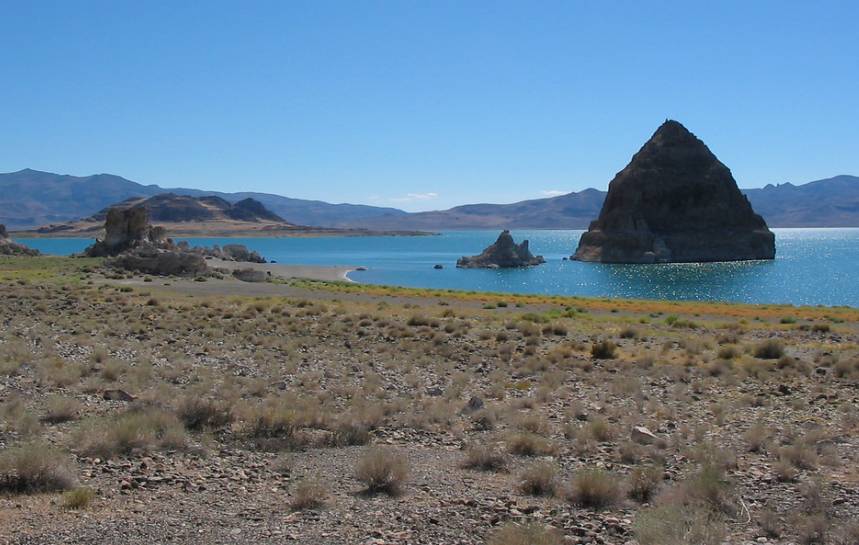
Thirty-five miles northeast of Reno, the high desert opens onto a sheet of blue-green water that doesn’t belong in the landscape until you stand in front of it. Pyramid Lake is a remnant of Ice Age Lake Lahontan, the inland sea that once covered much of northwestern Nevada. Today it is the largest remnant of that ancient lake, covering about 125,000 acres on the Pyramid Lake Paiute Reservation.
The drive on Nevada Route 445 looks ordinary at first: sagebrush, distant ranges, and a string of low hills. Then the road drops toward Sutcliffe and the lake fills the windshield. A pyramid-shaped tufa formation rises off the southeastern shore, the landmark that gave the lake its English name when John C. Frémont saw it in 1844. The Numu, the Northern Paiute people of this basin, know the lake as home. They call themselves Kooyooe Tukadu, the Cui-ui eaters, after the ancient sucker found nowhere else on Earth.
Start at the Pyramid Lake Museum and Visitor Center
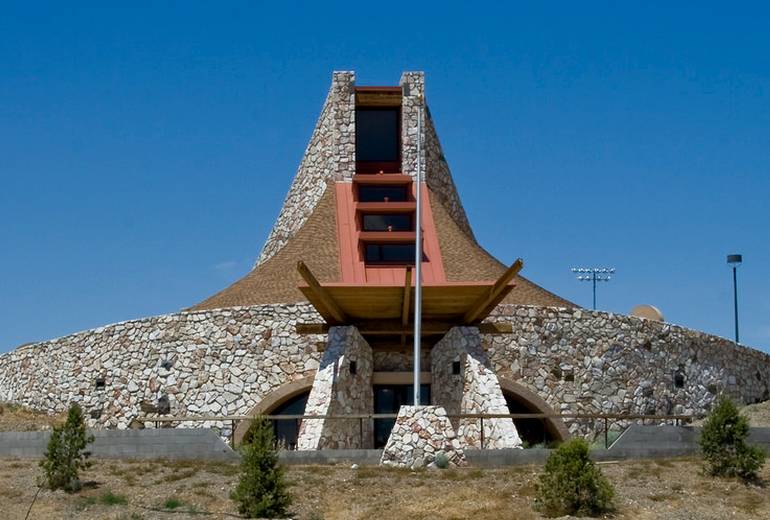
Begin in Nixon at the Pyramid Lake Paiute Tribe Museum and Visitor Center, 709 State Street. Admission is free; donations support the exhibits. Winter hours (October through April) are Monday through Friday, 10:00 a.m. to 4:30 p.m. Summer hours (May through September) add Saturday on the same schedule—call (775) 574-1088 before you go.
The museum is the best orientation you will get. Exhibits cover Numu history and culture, the Pyramid Lake War of 1860, the basin’s natural history, Lahontan cutthroat trout, and the cui-ui. The display also includes the Stone Mother, the tufa figure at the heart of the tribe’s origin story. Staff sell recreational and camping permits and can tell you which beaches are open that day.
If you are coming from Reno and want to reach the water first, stop at the Ranger Station in Sutcliffe instead. It is at 2500 Lakeview Drive and is open every day from 6:00 a.m. to 6:00 p.m. Rangers can be reached at (775) 476-1155.
Tufa Towers and a Lake Older Than the Desert Around It
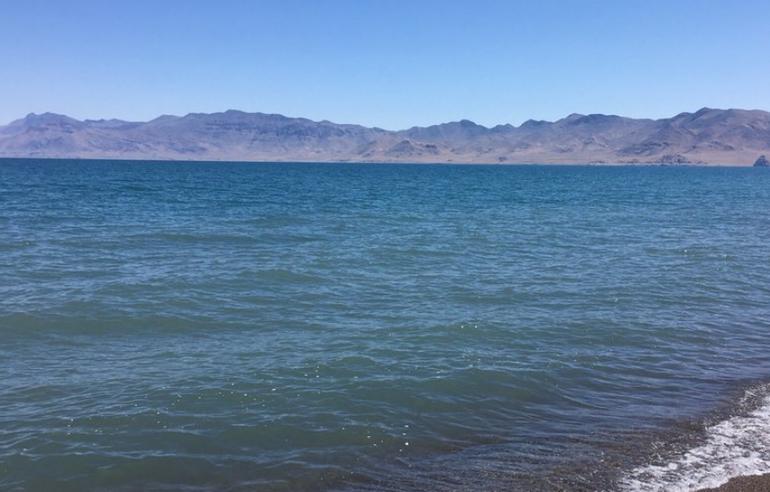
Pyramid Lake sits at roughly 3,800 feet in a closed basin. The Truckee River is its only major inlet. At its Ice Age high stand, Lake Lahontan was hundreds of feet deeper and spread across an area larger than present-day Lake Ontario. When the climate dried, most of that water vanished. Pyramid Lake remained.
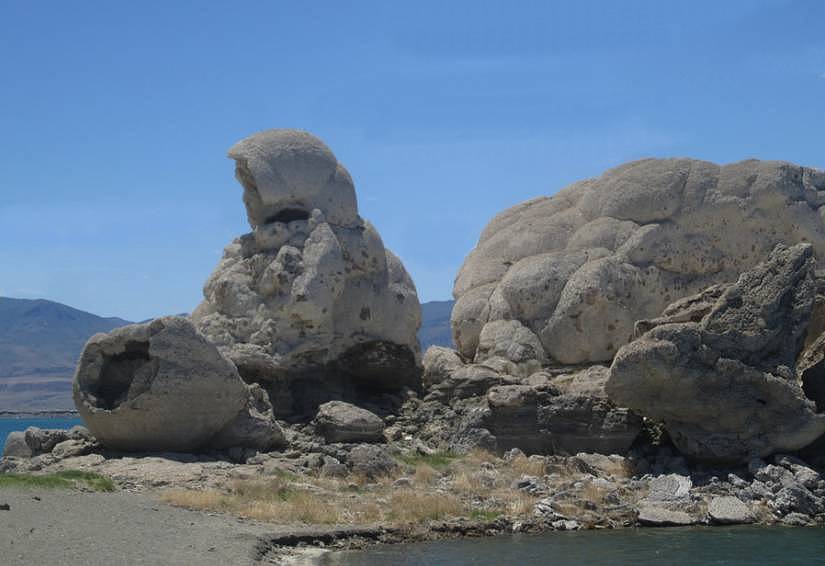
The pale rock sculptures along the shore are tufa, a form of limestone. Between about 26,000 and 13,000 years ago, calcium-rich spring water mixed with carbonate-rich lake water, building mounds, reefs, sheets, and towers. Some formations look like popcorn. Others look like dog heads, needles, or human profiles. The namesake pyramid is a tufa island, not a built monument.
Anaho Island National Wildlife Refuge
Anaho Island is the lake’s largest island and a National Wildlife Refuge. President Woodrow Wilson set it aside in 1913 as a sanctuary for colonial nesting birds. It remains one of the largest American white pelican colonies in the western United States. Pelicans arrive each spring from Southern California and Baja California. California gulls, double-crested cormorants, Caspian terns, and herons also nest there.
The island is closed to the public. Boats must stay at least 1,000 feet away. You can still watch pelicans from the open shoreline on the west side of the lake, especially near Pelican Point when birds move between the island and feeding areas.
The Stone Mother and Other Closed Sacred Sites
In Pyramid Lake Paiute tradition, the Stone Mother is a woman who sat on the eastern shore weeping for her exiled children. Her tears filled the lake. She sat so long that she turned to stone, her basket still beside her.
The formation is sacred. After years of graffiti, trash, and trespass, the tribe closed the Stone Mother, the Pyramid, the Needles, the Beehives, Marble Bluff, and Anaho Island to the general public. The north and east sides of the lake have been restricted for years. Do not follow old blog posts or map pins that treat those sites as open viewpoints. Rangers cite visitors who ignore the closures.
Other tufa you may notice from open ground include dog-head rocks, popcorn rocks, and Indian Head Rock on the west side, a popular day-use and camping stretch.
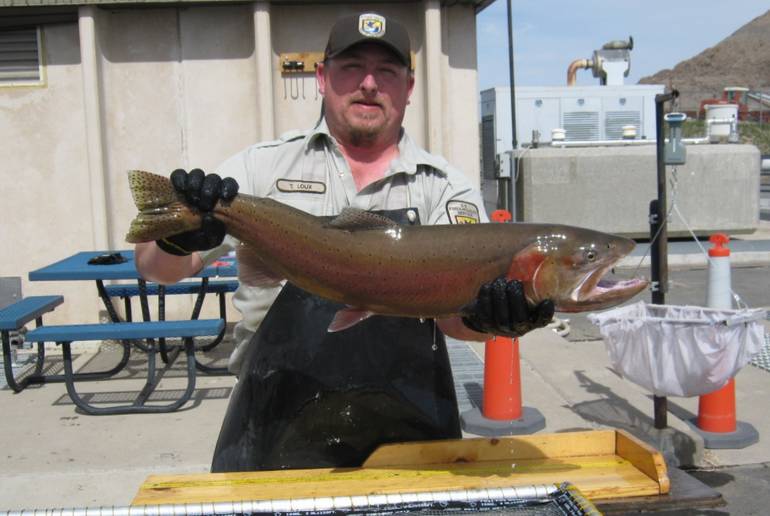
Fishing Pyramid Lake
Pyramid Lake is a world-class fishery for Lahontan cutthroat trout. In 1925, Paiute angler Johnny Skimmerhorn landed the world-record cutthroat at 41 pounds. Trophy fish still draw anglers from far outside Nevada. You do not need a Nevada state fishing license on the lake. You do need a tribal fishing permit.
Lahontan cutthroat season runs October 1 through June 30. Sacramento perch fishing is open year-round, with a daily limit of 10 perch. Current published fishing permit prices are $27 for an adult daily permit and $70 for three days. Youth ages 12 to 17 pay $15 daily or $39 for three days. A second rod requires its own permit at the adult rate. Children under 12 can fish for free with an adult who holds a valid permit.
Rules are strict because the fishery is managed for conservation:
* Barbless hooks only
* No bait, scent, eggs, or organic matter on the hook
* Keepers are 17 to 20 inches, or over 24 inches.
* You may keep two fish in the smaller slot, or one slot fish and one fish over 24 inches.
* One stringer per angler
* Do not fillet fish on the reservation; rangers must verify size.
* Fish from one hour before sunrise to one hour after sunset
* No fishing from the docks
Closed fishing and boating zones include a 1,000-foot radius around the mouth of the Marble Bluff Fishway, a 1,000-foot radius around the Sutcliffe spawning channel, 1,000 feet off the Needles shoreline from Wizard Cove to Fox Bay, and the Truckee River and delta. Boats must stay 250 feet from shoreline anglers.
Only fishing guides and boat charters approved by the Tribal Council may operate on the lake. Unauthorized guiding can bring a large fine. Buy permits at pyramidlake.us, the Sutcliffe Ranger Station, or the Nixon Museum.
Hatcheries That Keep Native Fish in the Lake
The Pyramid Lake Paiute Tribe runs a fisheries program built around hatcheries and a shoreline spawning channel near Sutcliffe. Facilities have included Dunn Hatchery, Numana Hatchery, and lake operations for cutthroat, plus smaller cui-ui production sites. Each year the program raises and releases large numbers of Lahontan cutthroat trout. Cui-ui are reared in years when Truckee River flows are too low for a strong natural run.
The cui-ui lives only in Pyramid Lake and is listed as endangered. Cutthroat recovery has been a long project involving the tribe, the U.S. Fish and Wildlife Service, and the Marble Bluff Fish Passage facility on the lower Truckee. School groups can sometimes tour hatcheries during the March through May spawning season. Public drop-in access is limited, so ask at the Ranger Station or museum rather than driving up to a facility unannounced.
Those hatcheries are why a day of fishing here still feels like a living fishery, not a memory.
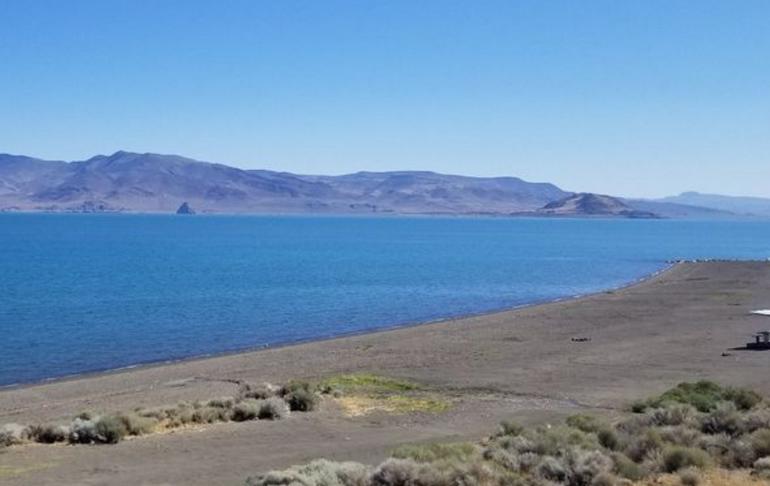
Camping and Day Use on the West Shore
A tribal permit is required for day use, swimming, camping, and boating. Day use is sunrise to sunset. Published prices at this writing are $25 for daily day use, $65 for three-day day use, $35 overnight camping per vehicle, and $90 for three-day overnight camping. Daily boating is $30; daily jet ski use is $60. Camping permits are sold per vehicle, not per person, and an overnight permit is valid until 11:00 a.m. the next day. Confirm current rates before you leave, because the tribe updates its fee schedule.
West-shore beaches around Sutcliffe are the practical public zone. Popular names you will hear include Wino Beach, Warrior Point, Pelican Point, and Indian Head. Some sites have portable toilets. Many do not. Campfires belong only in established fire pits, and fire restrictions can appear with little notice. The reservation has no trash collection. Pack everything out.
For showers, flush toilets, laundry, and hookups, use Pyramid Lake Marina and RV Park at 2500 Lakeview Drive in Sutcliffe. It is a small, exposed desert park with full-hookup sites, a boat launch, and easy access to the Ranger Station. It is the simplest overnight base if you want a bed or an RV pedestal after a windy afternoon on the sand.
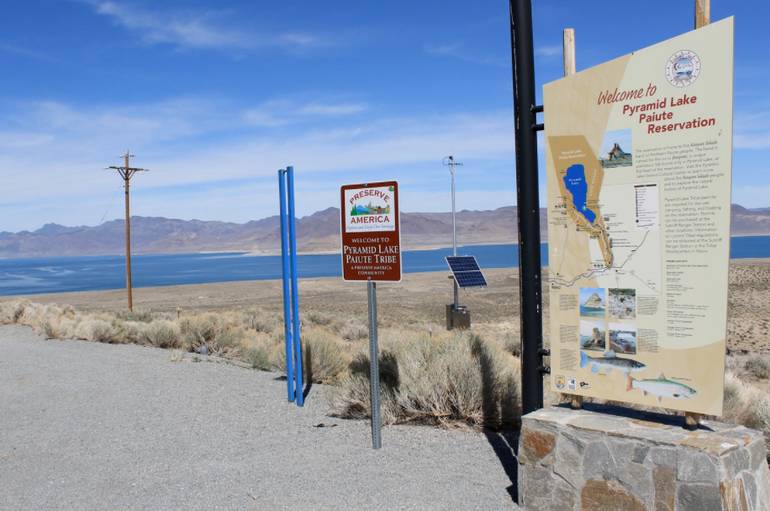
How to Get to Pyramid Lake
From Sparks, take Nevada Route 445 (Pyramid Way) about 33 miles northeast to Sutcliffe. The drive is roughly 45 minutes to an hour from central Reno, depending on traffic on the north end of the city. From Fernley or Wadsworth, State Route 447 leads to Nixon and the lake’s south end.
The main paved approaches are straightforward. Many spur roads along the shore are dirt and sand. After rain or in deep loose sand, a two-wheel-drive car can get stuck. If you leave the pavement, high clearance helps. Cell service is uneven. Download maps and your permit confirmation before you leave town.
Useful addresses:
- Ranger Station / Marina area: 2500 Lakeview Drive, Sutcliffe, NV
- Museum and Visitor Center: 709 State Street, Nixon, NV
Buy permits online in advance when you can. The Ranger Station can sell them in person, but a weekend fishing opener isn’t the time to discover the line.
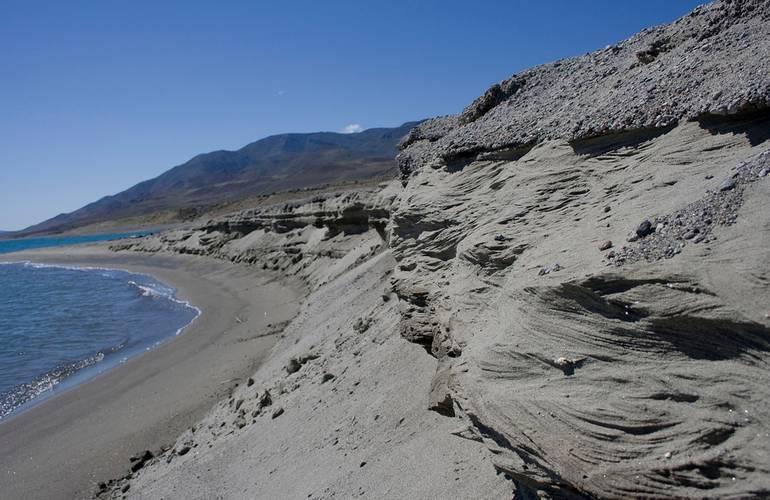
Travel as a Guest
Speed limits on the reservation are enforced. Archaeological sites are protected; do not collect rocks, bones, or artifacts. Pets should be controlled. Events organized by outside groups need Tribal Council approval. Stay on open roads and open beaches. If a gate is closed or a sign says keep out, turn around.
Pyramid Lake is an easy day trip from Reno or Sparks, but it is not a state park. You are a guest on sovereign tribal land. Buy the right permit, stay out of closed areas, and the lake rewards you with fishing, wide beaches, pelican-filled skies, and a museum that explains why this place still matters.
Visiting Pyramid Lake FAQ
Do I need a permit to look at the lake?
If you stop to use the shore, swim, picnic, or stay after a quick viewpoint photo, buy a day-use permit. Permits are required for swimming, camping, fishing, and boating. Purchase them at pyramidlake.us, the Sutcliffe Ranger Station, or the museum in Nixon.
Do I need a Nevada fishing license?
No. The Pyramid Lake Paiute Tribe manages Pyramid Lake. A tribal fishing permit replaces a state license on the lake.
When is cutthroat season?
October 1 through June 30. Perch fishing stays open all year under tribal rules.
Can I visit the Stone Mother or climb the Pyramid?
No. The Stone Mother, the Pyramid, the Needles, the Beehives, Marble Bluff, and Anaho Island are closed to the public. Instead, view the Stone Mother exhibit at the museum.
Is Anaho Island open for birding?
The refuge is closed, and boats must stay 1,000 feet away. Watch pelicans from legal west-shore pullouts.
Where should first-time visitors go?
Sutcliffe for the lake, marina, and Ranger Station; Nixon for the museum. Stay on the west side unless tribal staff tells you otherwise.
Are the dirt roads safe in a regular car?
Main highways are paved. Shore spurs can be soft sand. If you don’t have clearance or four-wheel drive, stay on graded access near Sutcliffe.
Can I have a campfire?
Only in fire pits when fires are allowed. Check current restrictions at the Ranger Station.
Where do I check rules the morning I leave?
Start with pyramidlake.us and call the Ranger Station at (775) 476-1155.
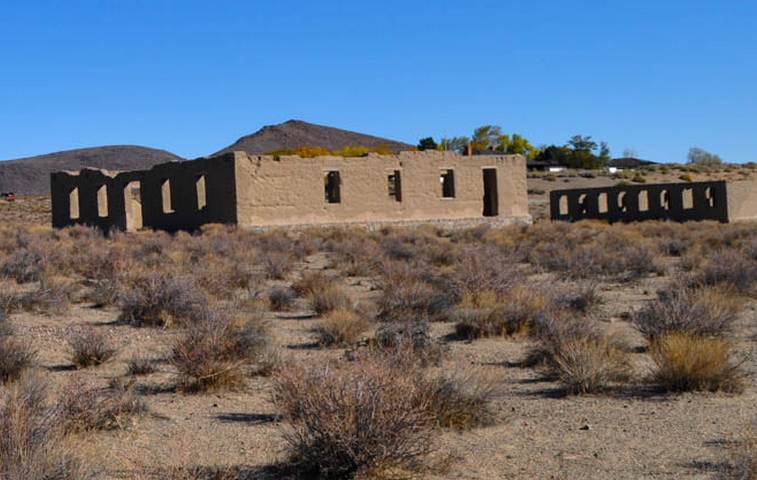
Fort Churchill Nevada State Historic Park
Fort Churchill Park preserves the ruins of a 19th-century U.S. Army fort. It was built in 1860 to protect early settlers and the Pony Express mail route. Most of Fort Churchill was abandoned by the late 1860s; this once important military outpost and Pony Express station decayed in the hot desert sun. Visitors can walk through the ruins of the old fort and imagine life in its heyday. Fort Churchill is located along the Carson River, eight miles south of Silver Springs on U.S. 95A. The park is 40 miles east of Carson City and 36 miles west of Fallon.
Discover more from Daytrippen.com
Subscribe to get the latest posts sent to your email.
Born and raised in Reno, Pyramid Lake has always been one of the greatest gifts of our area, but I believe the Pinnacles , the Stone Mother and all of the backside have been closed for the past 5 years or so, very sad but understandable.
. Hi there regarding your article on pyramid lake Nevada.
Yes it’s very easy to get stuck in the dirt and sand there.
Not all cell phones are going to work out there very few providers reach to that area.
There’s only one tow company that I recall that is allowed to go there if someone needs one there might be a little bit of a wait but they’re very professional and they do their job very well.
The local residents are helpful and keep an eye out for visitors that maybe in need of a phone call tow truck or ranger station etc.
Just a few things off the top of my head that are good to know in advance when traveling out that way.
MY FIRST VISIT TO WAS ABOUT 32 YEARS AGO & I’VE BEEN IN LOVE WITH IT SINCE.
My first visit was also about 30 years ago. And we almost got stuck, but the old Bronco pulled us through. Thanks for the comment.