- 13
- 35shares
Ignite Your Wanderlust on America’s Mother Road – Route 66
The sunbaked Mojave Desert stretches endlessly under a vast blue sky, punctuated by faded neon signs, volcanic craters, and enigmatic stone guardians. Welcome to the Amboy Loop, a 60-mile stretch of historic Route 66 in California that’s equal parts time capsule and thrill ride. Kicking off from Barstow (or Ludlow if you’re looping from I-40), this off-the-beaten-path detour from the interstate delivers raw Americana – ghost towns whispering mining tales, quirky roadside relics, and hikes into ancient lava fields.
Whether you’re a history buff, Instagram seeker, or just craving a break from the freeway drone, this loop packs more punch per mile than most modern drives. Buckle up as we cruise east from Barstow’s edge, through Daggett’s dusty echoes and Newberry Springs’ cinematic charm, all the way to Essex’s forgotten airstrip. Ready to chase the ghosts of Route 66?
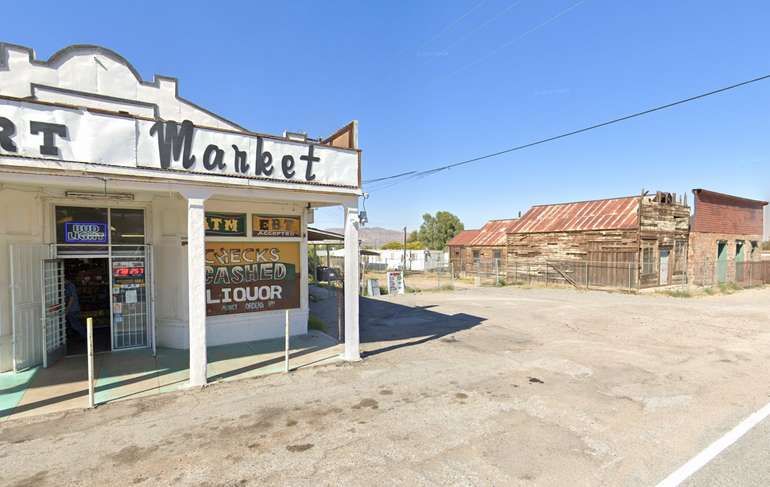
Daggett: The Fading Frontier Jewel
Tucked just 10 miles east of Barstow, Daggett (once cheekily dubbed Calico Junction) sprang to life in the late 1800s amid a silver rush. Renamed in 1883 after mining magnate John R. Daggett, it buzzed with a stamping mill by the Mojave River, where legendary 20-mule teams dragged ore from the Calico Hills for processing and rail shipment via the Southern Pacific. Today, it’s no full ghost town – a handful of resilient locals hang on amid abandoned adobe ruins – but the vibe screams “last call for the Wild West.”
- Location and Access: 10 miles east of Barstow on National Trails Highway (Route 66); easy exit from I-40. Free street parking; open 24/7 for self-guided wandering.
- Highlights: Explore crumbling saloons and mill remnants; snap pics of the Mojave River bed; detour to nearby Calico Ghost Town for more mining lore.
- History: Born from the 1880s silver boom, peaked with railroads hauling ore until the early 1900s bust; now a quiet Route 66 survivor.
- Why It Stands Out: It’s the perfect “almost-ghost” intro to the loop – eerie yet accessible, with zero crowds and 360-degree desert views that feel like stepping into a Sergio Leone flick.

Newberry Springs: Where Hollywood Meets the Horizon
Twenty miles east of Barstow, Newberry Springs trades Daggett’s grit for quirky charm, dotted with small farms, weathered barns, and the occasional abandoned relic. It’s slim pickings beyond gas pumps and ranch gates, but that’s the allure – unfiltered Route 66 simplicity.
- Location and Access: 20 miles east of Barstow on Route 66; pull off easily for fuel or a quick stretch.
- Highlights: Iconic Bagdad Cafe (the 1988 film star that’s still slinging coffee and pie); roadside ranches waving like green mirages; the eccentric Volcano House, a 1970s “volcano” folly built by a dreamer.
- History: Evolved from railroad sidings in the early 1900s to a Route 66 pit stop; the cafe’s film fame in the ’80s revived it from obscurity.
- Why It Stands Out: This spot’s got cinematic soul – channel your inner nomad over a diner meal, then ponder the Volcano House’s wild backstory. It’s Route 66’s reminder that the best stories are the weird ones.
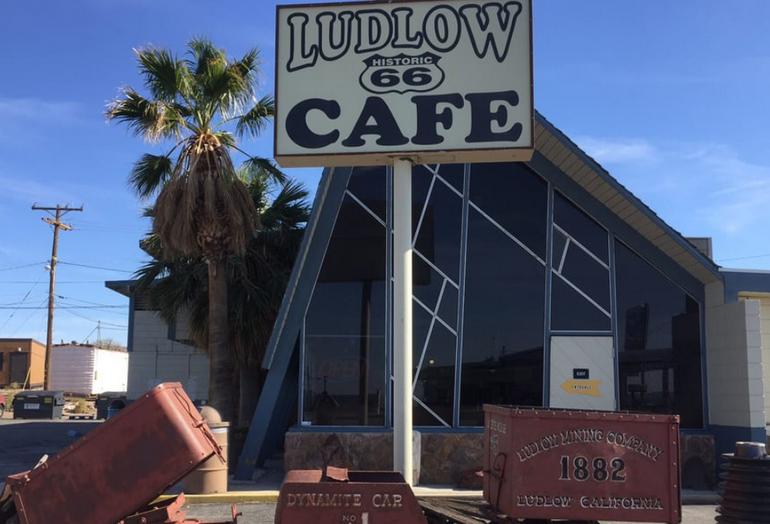
Ludlow: Rails, Riches, and Relics
Easing into the loop’s core, Ludlow hums with faded glory just after Newberry Springs – a blink-and-miss-it burg that’s all that’s left of boomtown dreams.
- Location and Access: About 30 miles east of Barstow on Route 66 (National Trails Highway); quick I-40 exit for gas and grub.
- Highlights: Ludlow Cafe for retro eats; the old gas station and motel for photo ops; serene town cemetery overlooking the desert.
- History: Born as a 1880s rail stop for steam engines, it exploded with the 1905 borax strikes, spawning saloons, the Tonopah & Tidewater Railroad to Death Valley, and a short-haul mining line – all abandoned post-boom.
- Why It Stands Out: Ludlow’s a microcosm of Route 66’s rise and fade – grab a coffee amid the ruins and feel the pulse of lost prosperity in every dusty corner.

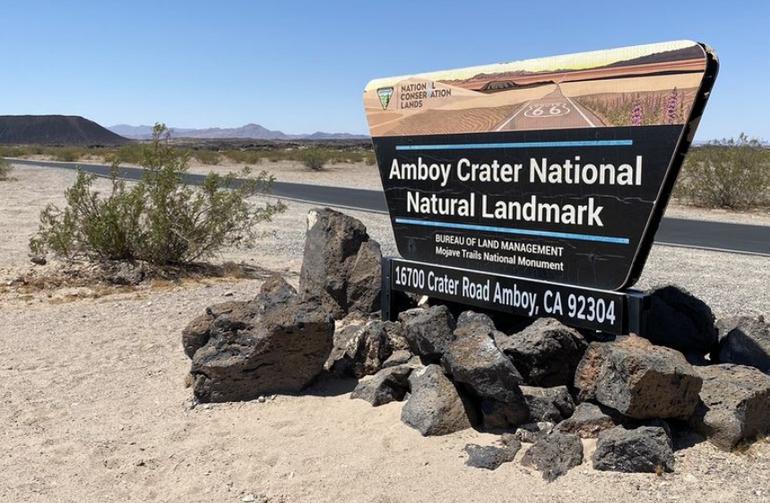
Amboy Crater: Volcanic Time Travel
The loop’s natural showstopper: a dormant volcano that’s been brooding for millennia, right off the blacktop.
- Location and Access: Roughly 45 miles east of Barstow; free parking lot with restrooms off Route 66. 2-mile round-trip hike (easy-moderate); best Sept–Feb to dodge summer scorch.
- Highlights: Ascend the cinder cone for panoramic Mojave vistas; explore rim trails or crater depths; stargazing heaven at dusk.
- History: Erupted 80,000 years ago, forming this 250-foot-tall landmark; starred in the 1959 flick Journey to the Center of the Earth.
- Why It Stands Out: It’s not just a hike – it’s a portal to prehistoric drama, blending adventure with that “only on Route 66” isolation. Earth tones and epic silence? Sign us up.
- BLM website
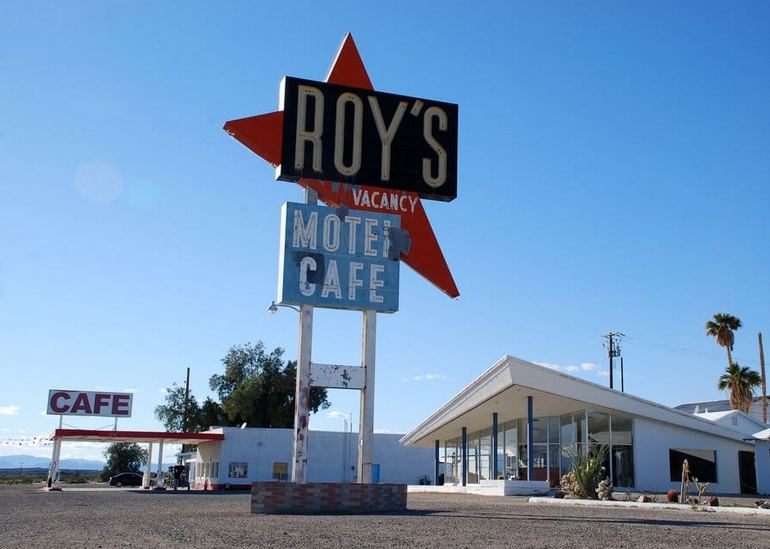
Roy’s Motel and Cafe: Neon Dreams in the Dust
Amboy’s beating heart (or what’s left of it), this Art Deco gem screams mid-century cool.
- Location and Access: Dead center of the Amboy Loop, 50 miles east of Barstow on Route 66; roadside pull-in, open daily for the shop.
- Highlights: Towering neon “Roy’s” sign (iconic at sunset); browse souvenirs and sodas in the revamped cafe; motel ruins for urban exploration-lite.
- History: Built in 1938 by Roy Crowl, it boomed in the 50s–’60s as THE Route 66 oasis; sold in 2005, now privately owned and partially restored.
- Why It Stands Out: Pure photogenic poetry – that sign’s glow against the desert dusk is Route 66’s unofficial emblem, turning a quick stop into a memory etched in chrome.

Guardian Lions: Enigmatic Sentinels of the Sands
Four miles east of Amboy, these marble mysteries guard the highway like forgotten pharaohs.
- Location and Access: Easy shoulder park on Route 66’s eastbound side; a short walk from the road – free and untamed.
- Highlights: Pose with the male-female lion pair; read visitor notes and trinkets piled at their paws; golden-hour lighting for killer shots.
- History: Origins shrouded in secrecy (dropped off in the 1960s?); they’ve become a viral Route 66 ritual since the rise of social media.
- Why It Stands Out: In a sea of sameness, these lions add whimsy and wonder – what’s their story? You’ll leave pondering, phone full of likes.

Chambless: Ghostly Echoes of the Open Road
A whisper of a town, Chambless clings to life as the loop’s eeriest pit stop.
- Location and Access: 55 miles east of Barstow on Route 66; no facilities, so BYO water – respect the restoration site’s boundaries.
- Highlights: Peering at the Roadrunner Cafe’s weathered sign; nearby desert art and wildflowers in spring; quiet vibes for reflection.
- History: Thrived as a 1930s–’50s gas haven; cafe shuttered in the ’70s amid I-40’s shadow; now under revival by The Road Runner’s Retreat.
- Why It Stands Out: It’s the loop’s raw ghost-town thrill – fragile, forgotten, and fiercely photogenic, with a comeback tale that tugs at the heart.
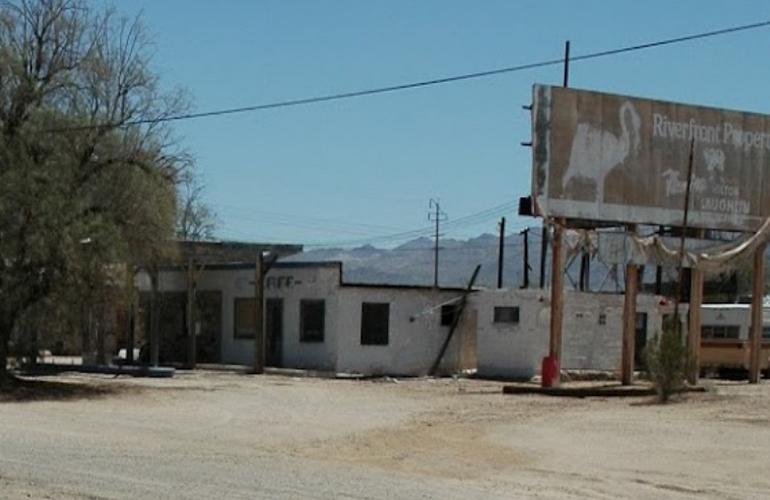
Essex: Amboy Loop’s Lone Outpost
Capping the Amboy circuit, Essex fades into the horizon with military ghosts and wide-open nothing.
- Location and Access: 60 miles east of Barstow (loop’s end); continue past I-40 for the Goffs detour. Rough roads to the airfield – high-clearance vehicle advised.
- Highlights: Sparse ruins and a WWII-era airfield (abandoned since the 50s); side trip to Goffs Schoolhouse Museum for pioneer exhibits.
- History: Mining camp turned into a WWII training base; post-war private use fizzled by 1950; now a Mojave Desert monument.
- Why It Stands Out: Essex delivers closure with a bang – that forsaken runway evokes epic tales, making your loop feel like a full-circle epic.
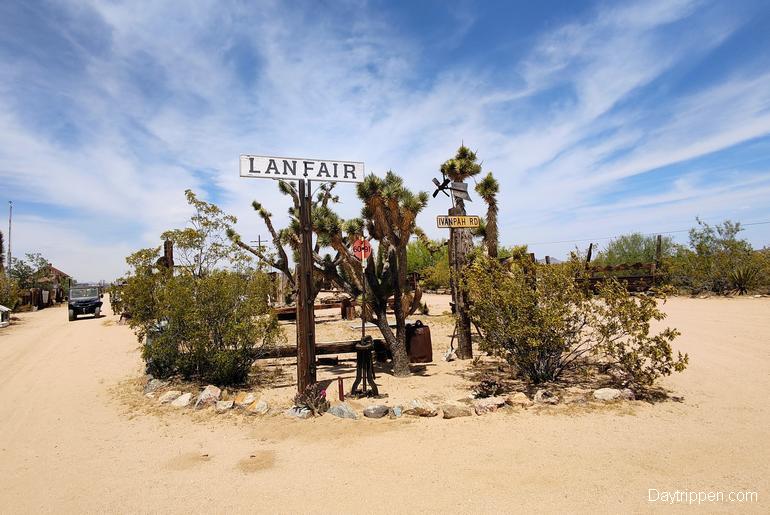
Goffs Schoolhouse Museum: Your Route 66 History Deep-Dive
When you think the Amboy Loop has shown you all its secrets, take the extra 20–25 minutes north on Goff’s Road (past Essex) to the beautifully restored 1914 Goffs Schoolhouse – the Mojave Desert’s unofficial Route 66 university.
- Location and Access: 12 miles north of I-40 Exit 107 (Essex Road), then 10 miles on old Route 66 to Goffs. Well-signed, free parking, open weekends Oct–June (https://themojaveroad.org/goffs-schoolhouse/)
- Highlights: The pristine Mission Revival schoolhouse, packed with exhibits; a sprawling outdoor museum of mining equipment, railroad cars, Depression-era vehicles, and the region’s largest collection of Mojave Desert/Route 66 artifacts; friendly docents who love sharing stories.
- History: Built in 1914 when Goffs was a bustling railroad and mining town, it served students until 1931. Saved from demolition in the 1990s by the Mojave Desert Heritage & Cultural Association, it’s now a labor-of-love museum that preserves everything from Native American artifacts to WWII desert-training camp relics.
- Why It Stands Out: This isn’t just a quick photo stop – it’s where the entire Amboy Loop suddenly makes perfect sense. After seeing Daggett’s mule teams, Ludlow’s borax rails, Amboy’s neon, and Essex’s abandoned airfield, walking through Goffs ties every thread together. You’ll leave with a clear understanding of why Route 66 was called “The Main Street of America.”
Cruise Complete: Why the Amboy Loop Calls You Back As the desert sun dips low and you merge back onto I-40, the Amboy Loop leaves you with more than mileage on the odometer – it’s a soul-stirring reminder of America’s roaming spirit. From Daggett’s mule-team legacy to Essex’s silent runways, this stretch isn’t just a drive; it’s a dialogue with the past, wrapped in desert solitude and surprise. Pack extra water, charge your camera, and hit the road soon – before the sands swallow these stories whole. What’s your favorite Route 66 relic? Share in the comments, and keep the Mother Road alive. Safe travels!
Discover more from Daytrippen.com
Subscribe to get the latest posts sent to your email.