- 126
- 145shares

Visiting Bolsa Chica Wetlands in Huntington Beach, CA
Bolsa Chica Wetlands offers one of the easiest and most rewarding nature escapes along the Orange County coast. This 1,400-plus-acre ecological reserve protects the largest saltwater marsh between Monterey Bay and the Tijuana River Estuary, right beside Pacific Coast Highway in Huntington Beach. Trails wind through wetlands, lowlands, and mesa habitat, offering ocean views, migratory birds, and surprising history within minutes of the beach. The California Department of Fish and Wildlife manages the reserve, which stays open daily from sunrise to sunset, with free admission and parking.

History of the Bolsa Chica Wetlands
People have used this landscape for thousands of years. Native American communities lived on the surrounding bluffs and harvested the rich resources of the wetlands long before European contact. In later centuries, the area served as a hunting ground for a private club, then hosted U.S. military gun emplacements during World War II, and later became an active oil field. Remnants of the gun positions still appear on the mesa, though summer wildflowers sometimes obscure them. Oil production continues on parts of the property, but most of the land has been restored and protected. Community groups including the Amigos de Bolsa Chica and the Bolsa Chica Land Trust spent decades advocating for the reserve’s expansion, helping turn former oil and development pressures into a coastal wetland.
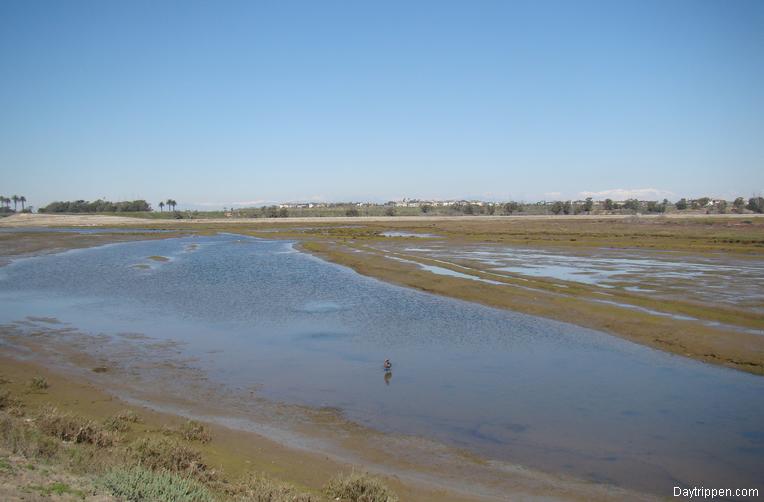
From Oil Fields to Ecological Reserve
The shift from industrial use to habitat protection is still visible today. Active oil wells sit alongside restored marsh and upland areas, creating a stark contrast that underscores how much of California’s coastal wetland has been lost. Bolsa Chica now supports five main plant communities—salt marsh, coastal strand, coastal sage scrub, freshwater wetlands, and riparian woodland—plus mudflats and open water. These habitats serve as a nursery for marine life, a stopover for migratory birds on the Pacific Flyway, and a home for rare and endangered species. The reserve also helps filter runoff and sequesters carbon, making it valuable beyond its scenic appeal.

Exploring the Trails and Interpretive Center
Start at the Bolsa Chica Interpretive Center (3842 Warner Avenue) for maps, bird lists, and exhibits that include live fish and reptiles, aquariums, and interpretive displays. The center is typically open Monday 9 a.m.–1 p.m. and Tuesday–Sunday 9 a.m.–4 p.m. From the north parking lot, a short walk along Warner Avenue leads across Los Patos Bridge to the Mesa Trail and overlooks. Spring wildflowers often line the path up onto the mesa.
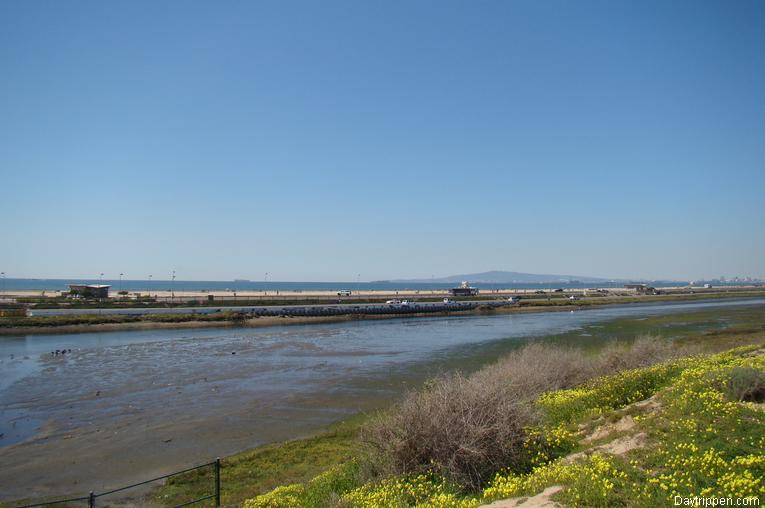
The south entrance, directly across Pacific Coast Highway from Bolsa Chica State Beach, offers a different experience. A long wooden pedestrian bridge crosses shallow water where stingrays, fish, and native aquatic plants are often visible below. Aggressive diving terns hunt along the edges. Beyond the bridge, roughly five miles of trails form loops and connectors, including raised berms that give elevated views of the marsh. Most routes are flat and relatively easy, though erosion can make some sections uneven. Benches and two wildlife-viewing areas offer places to pause with binoculars. On clear days, the San Gabriel and Santa Ana mountains appear inland while the Pacific stretches seaward. Interpretive Center Website.

Wildlife Watching at Bolsa Chica
Nearly 200 bird species have been recorded here, with some counts approaching 300 over time. Migration seasons bring large flocks of loons, grebes, ducks, and shorebirds. Year-round residents and seasonal visitors include great blue herons, snowy and great egrets, black skimmers, American avocets, black-necked stilts, and various terns. Endangered or threatened species such as the Belding’s savannah sparrow, California least tern, and light-footed Ridgway’s rail use the reserve. Other wildlife includes lizards, snakes (including rattlesnakes—stay on trails), coyotes, and marine life visible from the bridges and water’s edge. Early morning and late afternoon typically produce the most activity and the best light for photography. Professional and amateur photographers frequent the reserve for its open water, birds, and mountain or ocean backdrops.

Visitor Tips
The flat, mostly stroller-friendly trails make Bolsa Chica a practical choice for families with young children, though some eroded sections can be bumpy. Arrive early for quieter conditions and better wildlife sightings; parking lots fill quickly on weekends and holidays. Sunset walks offer strong light and fewer people. Bring water, sun protection, and binoculars—there is little shade on the trails. Restrooms and a water refill station are available at the Interpretive Center when it is open. Dogs, bicycles, and drones are not permitted on the trails (service animals excepted), and visitors must remain on designated paths. Fishing is limited to designated shoreline areas with appropriate permits; kayaking, boating, and swimming are prohibited in the wetlands.
Planning Your Visit: Hours, Parking, and Rules
Two free parking lots serve the reserve. The larger north lot sits at the corner of Warner Avenue and Pacific Coast Highway next to the Interpretive Center (3842 Warner Avenue, Huntington Beach). The south lot is on Pacific Coast Highway across from the Bolsa Chica State Beach entrance (near 18000 Pacific Coast Highway). Trails are open daily from sunrise to sunset.
Admission to the wetlands and Interpretive Center is free. Stay aware of your surroundings, keep valuables out of sight in vehicles, and give wildlife space. Poison oak, black widows, and rattlesnakes occur here, so remain on marked trails.

Directly across the highway, Bolsa Chica State Beach offers additional parking (paid) and a campground with sites arranged in a parking-lot layout, some facing the ocean.
Frequently Asked Questions About Visiting Bolsa Chica Wetlands
How large is the Bolsa Chica Ecological Reserve?
The reserve covers approximately 1,400 to 1,449 acres and is the largest remaining saltwater marsh between Monterey Bay and the Tijuana River Estuary.
When is Bolsa Chica open?
Trails are open daily from sunrise to sunset. The Interpretive Center is generally open Monday 9 a.m.–1 p.m. and Tuesday–Sunday 9 a.m.–4 p.m. (hours can vary on holidays—confirm before visiting).
Is there an entrance fee or parking fee?
No. Parking and trail access are free. The nearby state beach has paid parking.
Are dogs or bikes allowed?
Dogs (except service animals) and bicycles are not allowed on the reserve trails. They are permitted only in vehicles in the parking lots.
Are the trails suitable for strollers or wheelchairs?
Many sections are relatively flat and stroller-friendly, but erosion has made some paths uneven. The Mesa Trail and certain boardwalk areas are among the more accessible options.
Are guided tours available?
Yes. The Bolsa Chica Conservancy, Amigos de Bolsa Chica, and Bolsa Chica Land Trust offer free public tours and bird walks periodically. Check their websites or the Interpretive Center for current schedules.
Orange County Day Trip Ideas
Seal Beach California Day Trip
Huntington Beach Day Trip
Discover more from Daytrippen.com
Subscribe to get the latest posts sent to your email.
I grew up right there in the early 60’s before Huntington Harbor. Since then it’s become a much nicer place. ( it wasn’t then) happy some things change for the better.
Me too! Today I saw a pair of turkey vultures soaring high on the thermal drafts & 47 Canadian geese take off from the water all together! I was at Squirrel Park in the morning watching with my GSD girl who was fascinated watching all the birds.