- 10
- 28shares
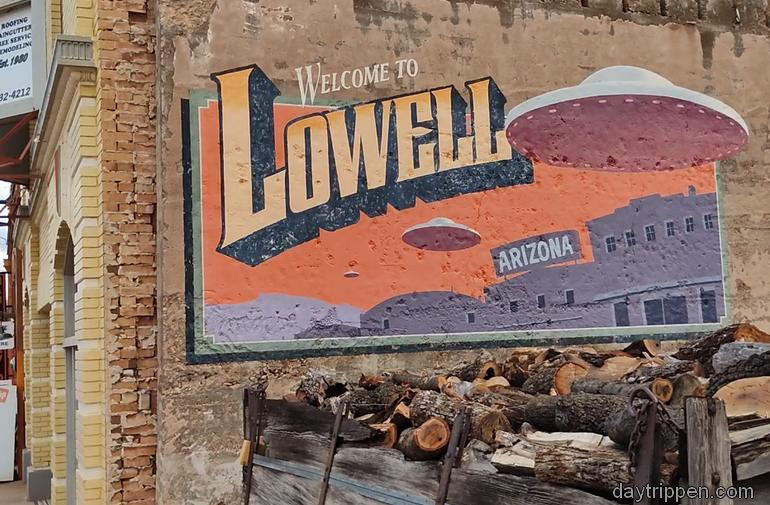
Walk Erie Street– Classic Cars & Mining History
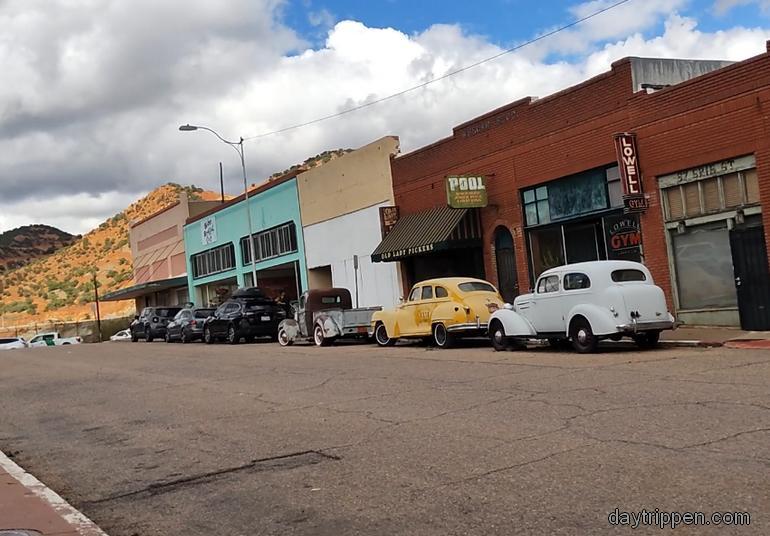
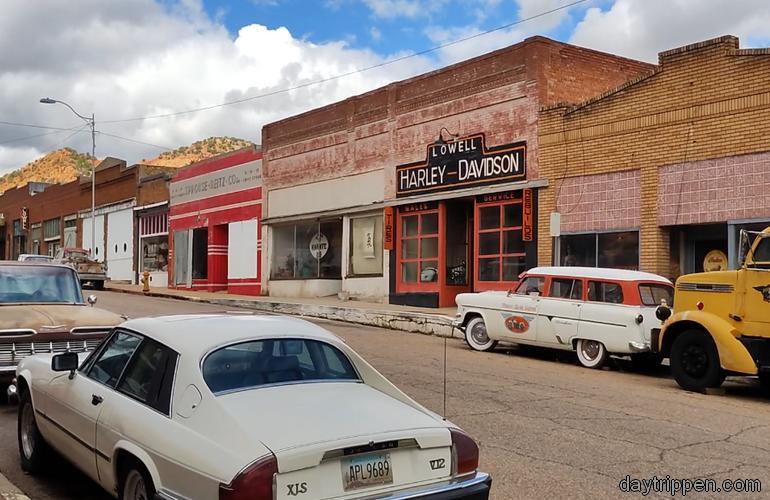
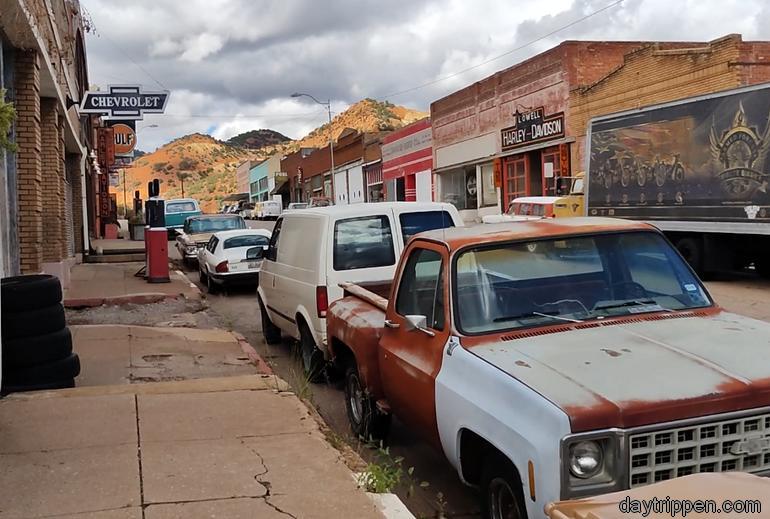
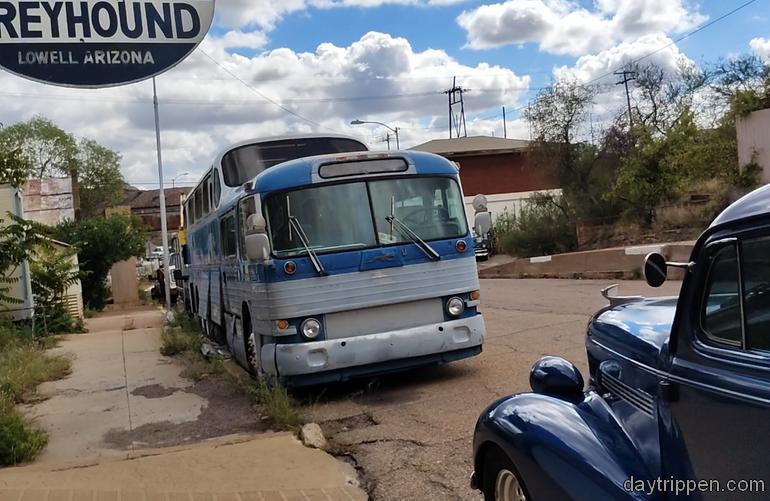
Erie Street is the only intact commercial stretch left of Lowell, Arizona—a copper mining town that once pulsed with life just southeast of Bisbee. What remains feels like a carefully staged movie set from the 1940s through the early 1960s, except nothing here is fake. Classic cars and trucks sit permanently parked along the curb. Storefront windows display period merchandise, mannequins, and faded advertisements. A Greyhound bus, antique gas pumps, and hand-painted signs complete the scene. This is not a recreated attraction. It is the real remnant of a community that the open-pit mine nearly erased, now kept alive by a dedicated group of locals known as the Lowell Americana Project.
From Copper Boomtown to One Surviving Street
In 1899 Frank Hanchett of Lowell, Massachusetts, purchased claims and formed the Lowell & Arizona Copper Mining and Smelting Company. A shaft was sunk, workers arrived, and a tent camp quickly grew into a proper town. By 1904 Lowell had a post office. The Warren-Bisbee Electric Railway added a streetcar stop, and Erie Street became the commercial and social center near the Lowell and Hoatson mines.
Saloon after saloon lined the street in the early years. Boarding houses fed and housed miners. As families settled in, schools, churches, a movie theater, a hospital, pharmacies, and stores followed. By 1910, nearly half of Bisbee’s population lived in Lowell and nearby Warren. At its height, the population of Lowell alone reached around 6,000. The Bisbee mining district ranked among the world’s most productive copper regions, and Erie Street thrived as part of that boom.
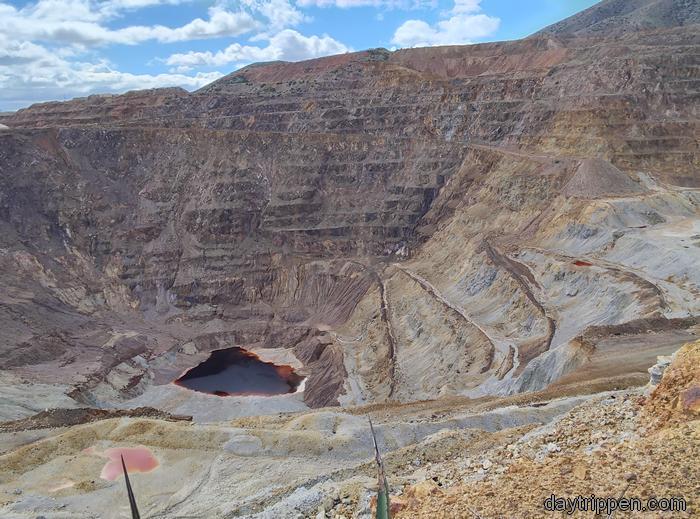
Swallowed by the Lavender Pit
Everything changed in the 1950s. Phelps Dodge opened the Lavender Pit, a massive open-pit copper mine named for Harrison Lavender. The pit eventually covered roughly 300 acres and reached about 900 feet deep. Over its life, it produced approximately 86 million tons of ore and around 600,000 tons of copper, along with gold, silver, and the distinctive Bisbee Blue turquoise.
To expand the pit, more than 250 homes and about 20 businesses had to go. Residents were offered market value for demolition or the cost of moving their houses. Entire neighborhoods—Upper Lowell, Jiggerville, Johnson Addition—disappeared. Highway 80 was rerouted. By the late 1950s Lowell had largely emptied. Mining at the pit ended in 1974. What survived was a short, roughly quarter-mile section of Erie Street and a handful of nearby remnants such as the 1931 Lowell School and Evergreen Cemetery.
The Lowell Americana Project Brings the Street Back to Life
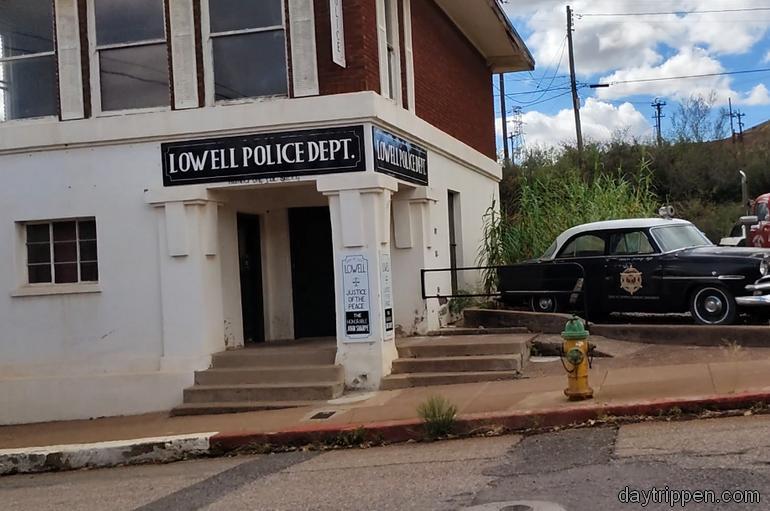
For years, the remaining buildings sat quiet. Then a group of residents, business owners, and enthusiasts—most notably Jay Allen and Dan Simonis—began restoring the street as the Lowell Americana Project. Their goal was cultural preservation, not commercial redevelopment. They filled empty windows with period-accurate displays, rehung vintage signs, added neon, and lined the curb with classic cars, trucks, motorcycles, police cars, and two Greyhound buses.
Today the street functions as a free open-air museum focused on mid-century American roadside culture. You can peer into the windows of a former Gulf or Shell gas station with restored pumps, an old movie theater, a pool hall, a Harley-Davidson and Indian motorcycle shop, a five-and-dime or department store (complete with mannequin parts and vintage appliances), a Greyhound terminal, a Ford dealership, and an auto repair shop. Hand-painted signs and brick murals add to the atmosphere. The project continues to evolve; volunteers have worked on additional displays such as a period radio station.
What You’ll See and Do on Erie Street Today
The experience is simple and powerful: park and walk. The street is still a public road, free and open 24 hours. Early morning or late-afternoon golden light is ideal for photography. Do not climb on the vehicles—they are privately owned and part of the ongoing display.
A few real businesses still operate among the curated storefronts. The original Bisbee Breakfast Club has long occupied the historic Rexall pharmacy building at 75A Erie Street and remains a popular stop for breakfast and lunch (typically 7 a.m. to 3 p.m. daily). Note that as of mid-2026, the restaurant is relocating to Old Bisbee after its lease with Freeport-McMoRan ends; confirm current hours and location before you go. Nearby, Old Lady Pickers offers an eclectic mix of antiques and collectibles, usually open on weekends.
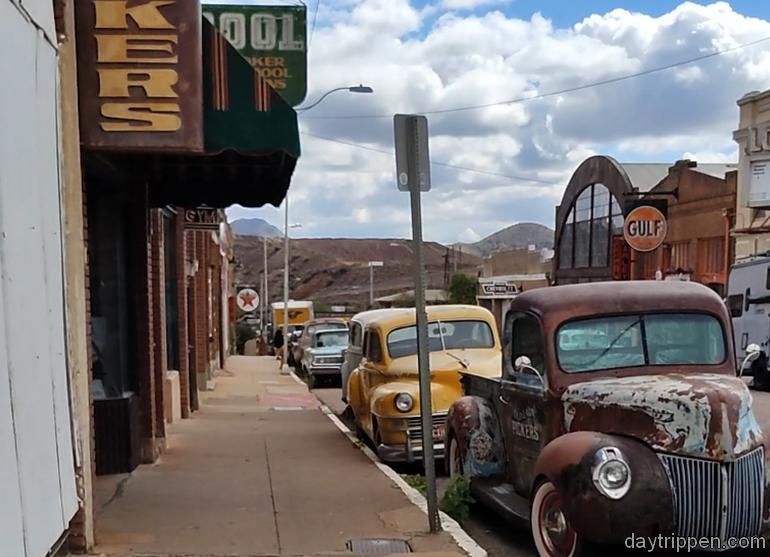
The overall feel is deliberately weathered and authentic rather than polished. That slightly worn quality is exactly what draws photographers, car enthusiasts, history fans, and day-trippers from across the Southwest and beyond. Erie Street regularly ranks among the most photographed streets in the region for good reason.
Visitor Tips and How to Get There
Erie Street sits in the Lowell district of Bisbee, just south of Old Bisbee along Arizona Highway 80. From the historic downtown area, it is only about a mile—easy to reach by car. Look for the Lowell signs near the edge of the Lavender Pit. Ample street parking is available.
Bisbee itself lies 92 miles southeast of Tucson, roughly 23 miles from Tombstone, and about 11 miles from the Mexican border. Many shops in Old Bisbee keep limited hours (often Thursday through Sunday), so plan accordingly if you are combining stops. The street itself needs no tickets or reservations. Respect the displays, stay in public areas, and enjoy the slow pace.
Why Erie Street is a Must-See
Erie Street offers something rare in the modern Southwest: a genuine fragment of a vanished mining community that has been thoughtfully preserved rather than rebuilt for tourists. Standing among the classic cars with the Lavender Pit visible nearby, you can almost hear the streetcars and the clatter of a working copper town. Whether you are a history buff, a classic-car fan, a photographer, or simply looking for an unusual stop on a Bisbee day trip, this short stretch of asphalt delivers a vivid, tangible connection to Arizona’s copper era. The Lowell Americana Project’s ongoing work keeps that connection alive for the next visitor who turns off Highway 80 and steps into another decade.
Arizona’s Must-Do Day Trips: Best Spots for a Weekend Adventure
Discover more from Daytrippen.com
Subscribe to get the latest posts sent to your email.