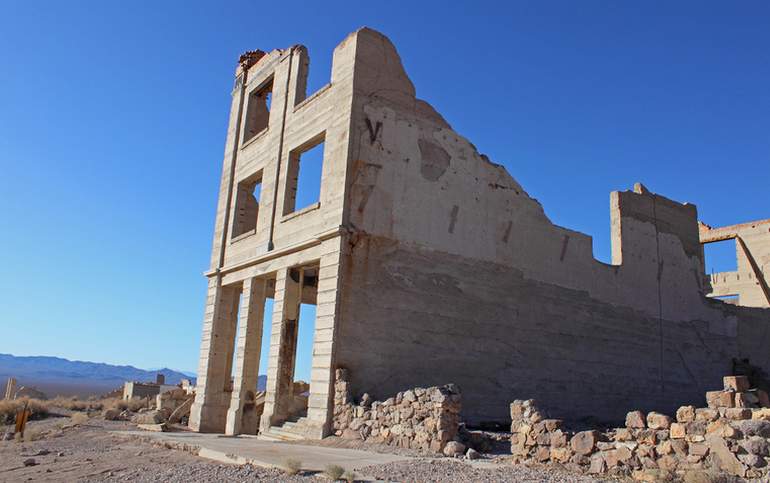
Nevada and Arizona’s Ghost Towns & Historic Gems
The Silver State and the Grand Canyon State are littered with the bones of once-thriving mining camps, stagecoach stops, and silver-rush boomtowns. While California may have its famous ghosts, Nevada and Arizona offer some of the West’s most atmospheric, well-preserved, and downright quirky abandoned (and semi-abandoned) places. From movie-set gold mines to towns where wild burros outnumber people, here are the standout ghost towns and living relics you need to see.
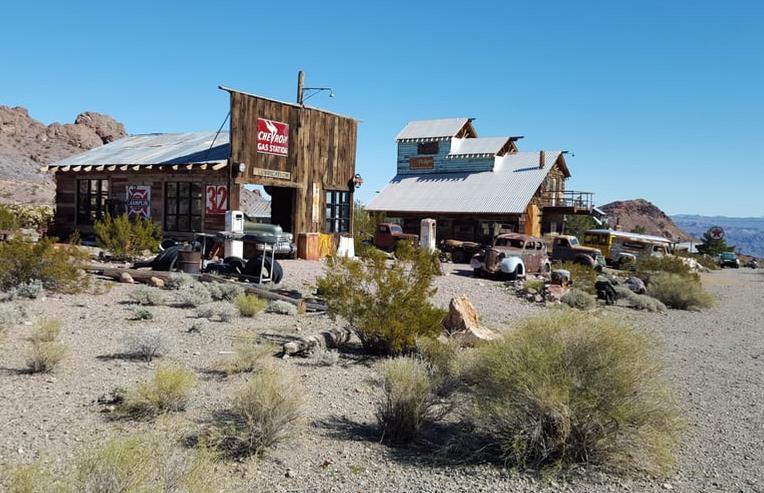
Vegas’ Secret Backyard Ghost Town (Nelson)
Nelson’s story begins in the rugged Eldorado Canyon, where Spanish explorers first noted mineral deposits in the 1700s, but serious gold and silver mining didn’t explode until the 1860s. The Techatticup Mine, established in 1861, became one of Nevada’s richest early producers, drawing a wild mix of prospectors, Civil War deserters, and claim-jumpers that led to frequent violence—including the 1897 murder of camp leader Charles Nelson. Production continued sporadically through World War II before the site largely fell silent, only to be revived in the 1990s when the Werly family purchased and restored it for tours.
- Location and Access: 40 miles southeast of Las Vegas via US-95 and Nelson Road.
- Highlights: Explore Techatticup Mine, see a crashed vintage airplane, rusty antique cars, and movie props scattered throughout.
- Why It Stands Out: Hollywood once used the site, and it still feels like a film set abandoned in the desert.
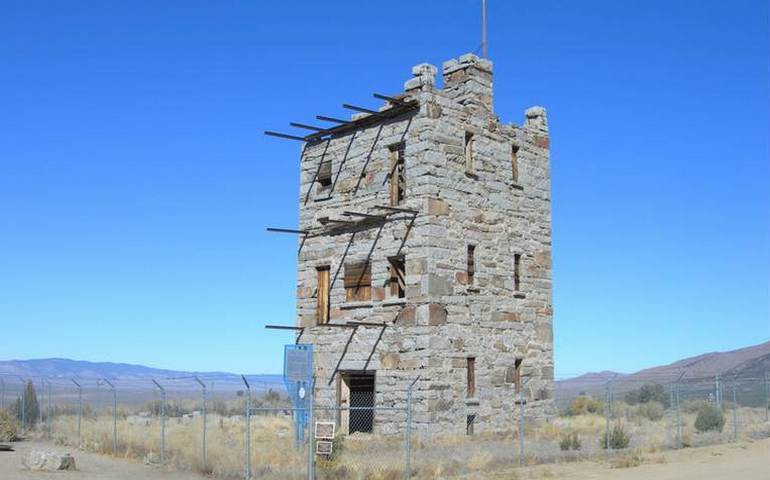
The Castle That Lost Its Kingdom (Stokes Castle)
In the late 1890s, during Austin’s silver-mining heyday, wealthy Eastern industrialist Anson Phelps Stokes— a mine developer, railroad magnate, and banker—built this three-story granite tower in 1897 as a lavish summer home for his family, modeled after a medieval Italian structure he admired. The family used it for just a month or two that year before Stokes sold his local mining interests, after which the castle stood mostly empty and fell into disrepair until a relative repurchased it in the 1950s.
- Location and Access: Just outside Austin on a hill, 170 miles east of Reno via US-50.
- Highlights: Three-story granite tower resembling a medieval castle.
- Why It Stands Out: An unexpected European-style castle rising from the rugged Nevada landscape.
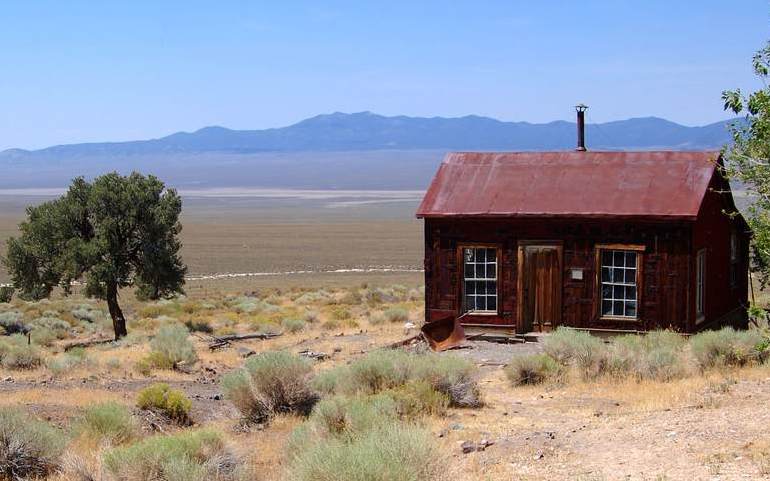
Frozen in 1898: Nevada’s Creepiest Time Capsule (Berlin)
Berlin sprang up in the late 1890s as a silver and gold mining camp in the Shoshone Mountains, reaching its peak around 1905–1908 with about 300 residents, a mine that produced roughly $849,000 in ore, and support from the larger Nevada Company. By 1911, dwindling production led to abandonment, leaving homes, machinery, and everyday artifacts remarkably intact. The site later became part of Berlin-Ichthyosaur State Park (established 1957, expanded 1970) to preserve both the ghost town and its nearby 225-million-year-old marine reptile fossils.
- Location and Access: 2½ hours northeast of Tonopah via NV-844 (remote but paved most of the way).
- Highlights: Preserved homes still containing original furniture, machinery, clothing, and 225-million-year-old ichthyosaur fossils.
- Why It Stands Out: Among the West’s most preserved ghost towns, step into a town frozen in time. Website.
The Gold Rush City That Evaporated Overnight (Rhyolite)
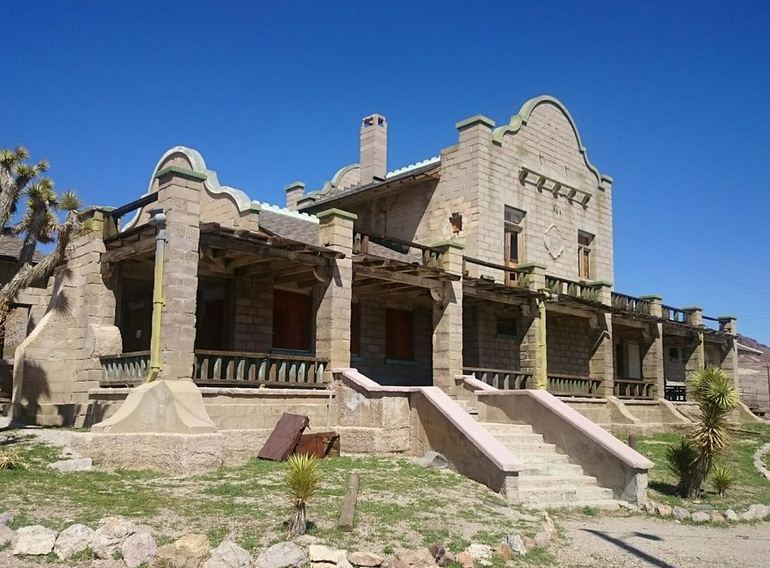
Rhyolite exploded into existence in early 1905 after Shorty Harris and E.L. Cross discovered rich gold-bearing quartz in the Bullfrog Hills near Death Valley. Within months, it boomed into a modern town of 3,500–10,000 people with electric lights, a stock exchange, an opera house, hospitals, and even a bottle house built from 50,000 beer bottles. Investor Charles M. Schwab poured millions into the Montgomery Shoshone Mine, but the Panic of 1907, exhausted ore, and mine closures triggered a rapid collapse; by 1911, the big mine shut down, power was cut by 1916, and the population plummeted to just a handful by the 1920s.
- Location and Access: 4 miles west of Beatty, 120 miles north of Las Vegas via NV-374.
- Highlights: Cook Bank ruins, bottle house, and the famous “Ghost Rider” sculpture nearby..
- Why It Stands Out: Dramatic ruins against the Amargosa Desert backdrop—pure post-apocalyptic Wild West.
Where Sinatra Drank and Ghosts Still Play Poker (Goodsprings / Pioneer Saloon)
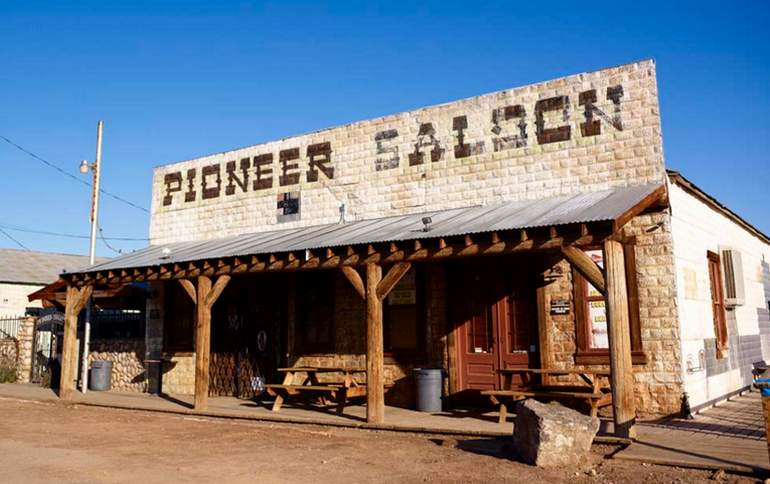
Goodsprings emerged as a lead and zinc mining camp in the early 1900s, peaking at around 800 residents during World War I-era booms before fading as operations declined. The Pioneer Saloon, built in 1913, became its enduring centerpiece—a rough-and-tumble watering hole where locals (and later celebrities like Clark Gable and Frank Sinatra) gathered, and where a miner was famously shot dead over a poker game in 1915, adding to its haunted lore.
- Location and Access: 35 minutes Southwest of Las Vegas via I-15 and NV-161.
- Highlights: Pioneer Saloon (1913), still serving cold beers; said to be haunted by a miner shot over a card game.
- Why It Stands Out: One of the closest real-deal ghost towns to Vegas with an authentic Old West bar.
The Richest Place on Earth… Until It Wasn’t (Virginia City)
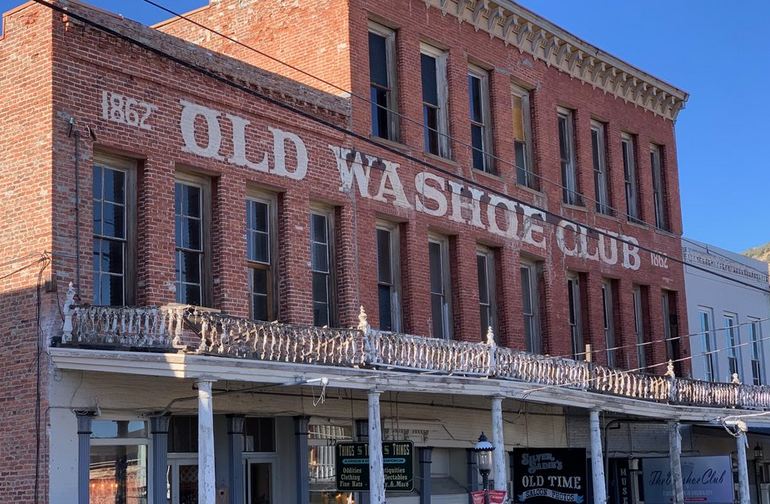
Virginia City detonated onto the map in 1859 with the discovery of the Comstock Lode, the richest silver strike in U.S. history, which funded the Union during the Civil War and helped build San Francisco’s fortunes. At its 1860s–1870s peak, it was a raucous metropolis of 25,000 with opulent saloons, theaters, and mines that produced hundreds of millions in wealth—before declining sharply in the 1880s as the deep ore played out, leaving behind a remarkably preserved historic district.
- Location and Access: 30 minutes southeast of Reno via NV-341.
- Highlights: Wooden sidewalks, the Delta Saloon, Comstock mine tours, and a historic train ride.
- Why It Stands Out: The best-preserved and liveliest 19th-century mining city in America. Website.
Sleep in a Real Ghost Town (Yes, the Bed Actually Creaks) (Gold Point)
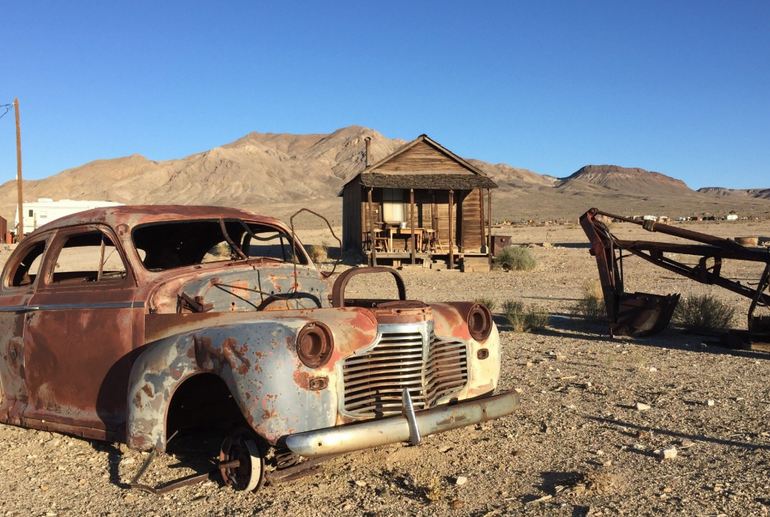
Gold Point began as a small 1880s mining camp but found new life in the 1920s with a significant gold strike that briefly revived it. The town slowly faded again as mining economics shifted, leaving a handful of original structures that current residents (now just seven or so) have lovingly restored, including the 1908 saloon and hotel, turning it into a unique overnight destination.
- Location and Access: 180 miles north of Las Vegas, 8 miles off US-95 on a good gravel road.
- Highlights: Restored 1908 saloon and hotel with original fixtures; experience a real ghost-town B&B.
- Why It Stands Out: You can literally sleep in a restored ghost-town hotel run by the town’s seven residents.
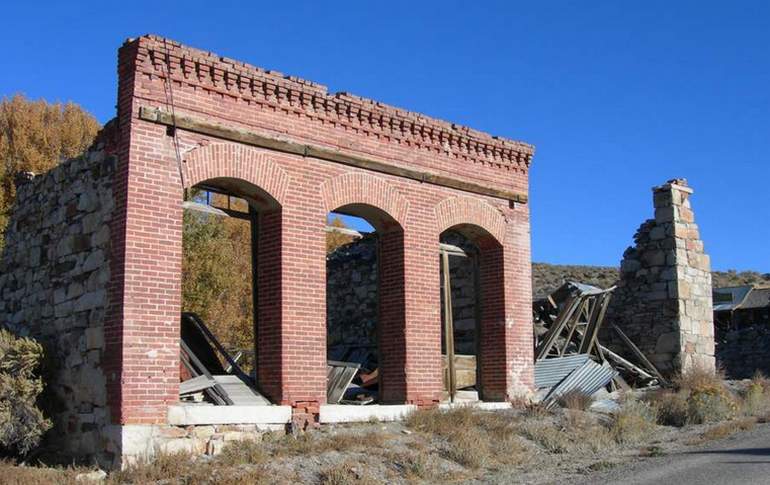
The Courthouse the Desert Refused to Swallow (Belmont)
Belmont boomed in the 1860s–1880s as a major silver-mining center and served as the Nye County seat, complete with a grand brick courthouse built in 1876. The town supported hundreds of residents with banks, saloons, and mines until the ore diminished and the county seat moved to Tonopah in 1905, after which Belmont gradually emptied, leaving its striking high-desert ruins largely intact.
- Location and Access: 46 miles north of Tonopah via NV-376 and dirt road.
- Highlights: Spectacular 1876 brick courthouse ruins, jail, crumbling bank, and saloon.
- Why It Stands Out: Gorgeous high-desert setting and one of Nevada’s most photogenic courthouse ruins.
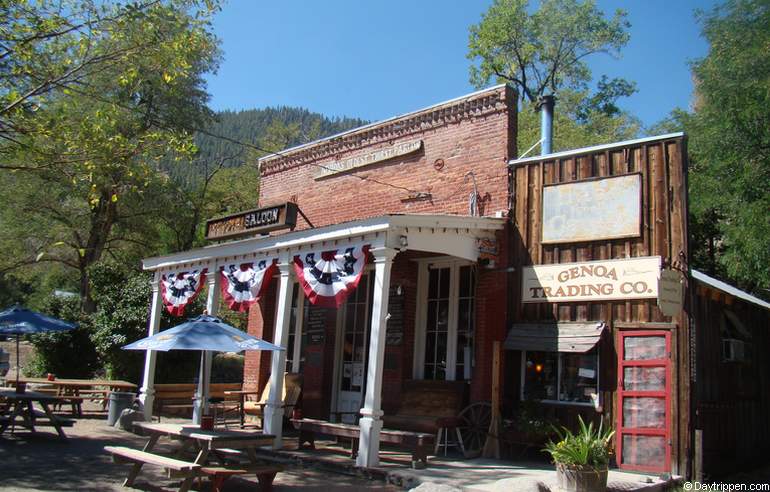
Nevada’s Oldest Bar Still Serving the Same Attitude (Genoa)
Genoa holds the distinction of being Nevada’s first permanent non-Native settlement, established in 1851 as Mormon Station along the California Trail. It quickly grew into a trading post and stage stop at the base of the Sierra Nevada; while never a classic boom-and-bust mining town, its 1853 bar has continuously served travelers and locals ever since, preserving the site as a living slice of early territorial history.
- Location and Access: 15 minutes south of Carson City at the base of the Sierra Nevada.
- Highlights: Nevada’s oldest bar (1853), Mormon Station museum.
- Why It Stands Out: Living history with the state’s oldest thirst parlor still pouring drinks.
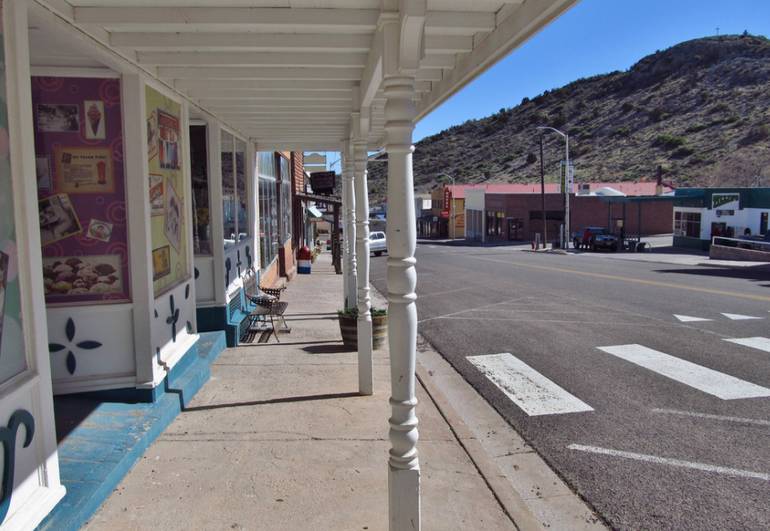
The Town So Lawless 75 Men Were Buried Before Anyone Died Naturally (Pioche)
Pioche erupted in the 1860s–1870s as one of the West’s roughest silver-mining camps, infamous for its lawlessness—legend says 75 men were killed in gunfights and disputes before the first resident died of natural causes. The Million Dollar Courthouse (built and repeatedly repaired at enormous cost) and other structures supported a booming but violent population until the mines declined in the 1880s, though the town never fully died and retains its rugged frontier character.
- Location and Access: 2½ hours north of Las Vegas via US-93.
- Highlights: Million Dollar Courthouse, aerial tramway ruins, Boot Hill cemetery.
- Why It Stands Out: Still has that lawless frontier vibe with incredible mountain scenery.
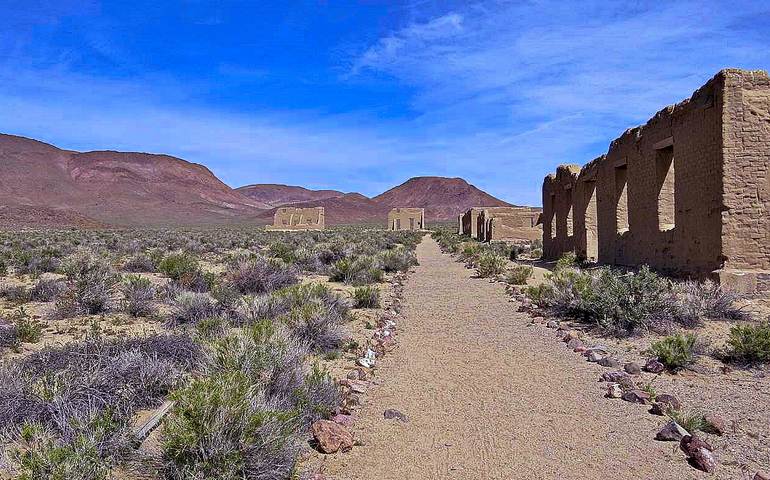
Adobe Bones on the Pony Express Trail (Fort Churchill)
Fort Churchill was established by the U.S. Army in 1860 to protect Pony Express riders, Overland Stage lines, and settlers along the Carson River route amid tensions with local Paiute bands. The adobe fort operated until 1869, when it was abandoned after the railroad bypassed the area; the harsh desert climate slowly eroded the structures into haunting ruins, while a visitor center now interprets its brief but vital role in opening the West.
- Location and Access: 30 miles east of Carson City via US-95A.
- Highlights: Crumbling adobe ruins beside the Carson River and a richly curated visitor center.
- Why It Stands Out: Eerie, wind-worn adobe skeletons that look straight out of a Western movie.
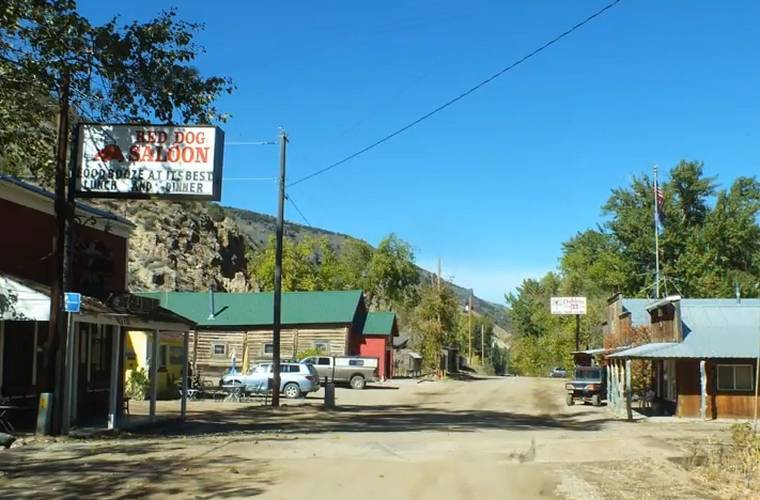
America’s Most Remote Bar (You’ll Earn That Beer) Jarbidge, Elko County, Nevada
Jarbidge owes its existence to a major gold discovery in 1909 in the remote Jarbidge Mountains, which briefly turned it into a bustling camp. It gained notoriety for hosting the last stagecoach robbery in the U.S. in 1916, but the isolation and eventual decline of mining kept it tiny and hard to reach—today it clings to life with a handful of residents and that legendary outdoor bar.
- Location and Access: 100+ miles of mostly dirt roads from Elko or Twin Falls, ID.
- Highlights: Outdoor Bar with dollar bills stapled to the ceiling, spectacular canyon setting.
- Why It Stands Out: So remote it barely ever died—still only reachable by dirt road.
Arizona’s Wildest Ghost Towns & Living Relics
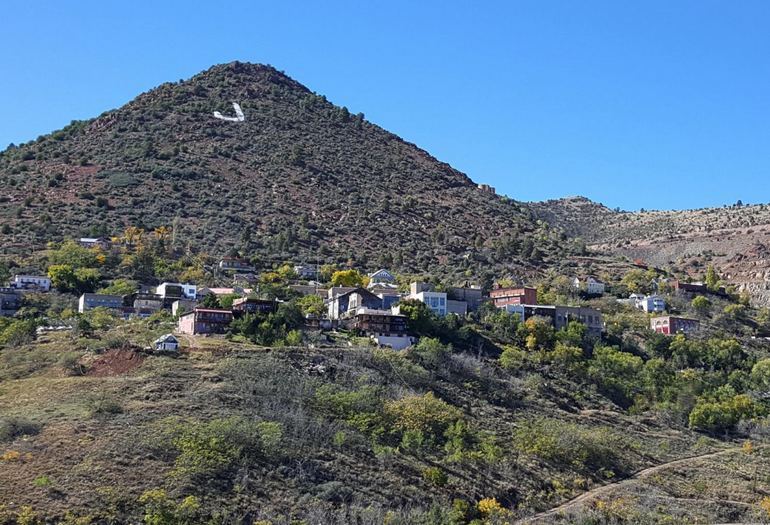
The Billion-Dollar Town That Slid Down the Mountain (Jerome)
Jerome was born in the 1880s–1890s as a wild copper-mining camp on the steep slopes of Cleopatra Hill, earning a reputation as the “Wickedest Town in the West” with saloons, brothels, and a population that swelled with miners. It produced over a billion dollars in copper (and slid literally downhill due to subsidence) before shutting down in the 1950s; the near-empty town was later reborn as an artsy enclave with galleries and hotels occupying the old buildings.
- Location and Access: 90 minutes north of Phoenix via I-17 and AZ-89A.
- Highlights: Sliding jail, art galleries in old brothels, haunted hotel.
- Why It Stands Out: The ultimate resurrected ghost town—now a bohemian mountain artist colony.
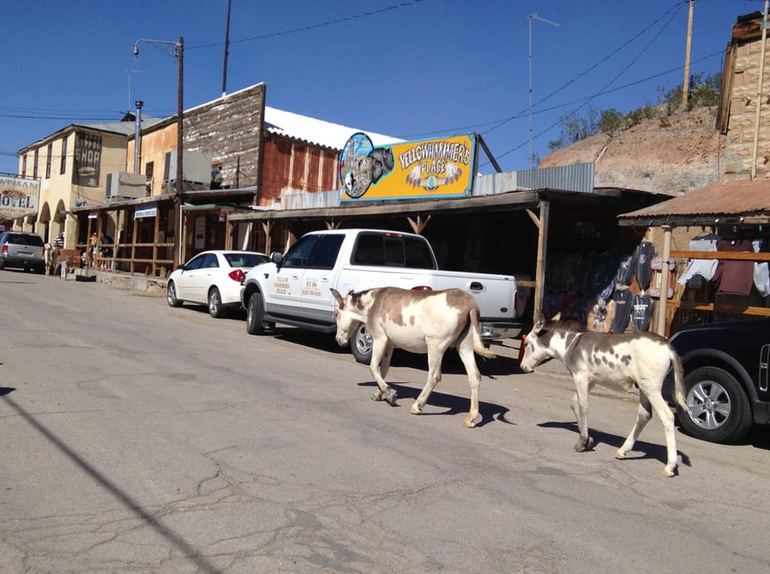
Where Wild Burros Own the Streets and Gunfights Are at 2 p.m. Sharp (Oatman)
Oatman boomed in 1915 when gold was discovered nearby, quickly growing into a lively Route 66 stop with saloons and hotels that even hosted Clark Gable and Carole Lombard’s honeymoon. Mining faded after World War II, but the town reinvented itself for tourism, keeping its burros (descendants of miners’ pack animals) roaming free and staging daily Wild West shows.
- Location and Access: 30 minutes from Laughlin/Bullhead City via historic Route 66.
- Highlights: Wild burros roaming the streets, daily gunfight shows.
- Why It Stands Out: The most fun, touristy, and burro-filled ghost town experience in the Southwest.
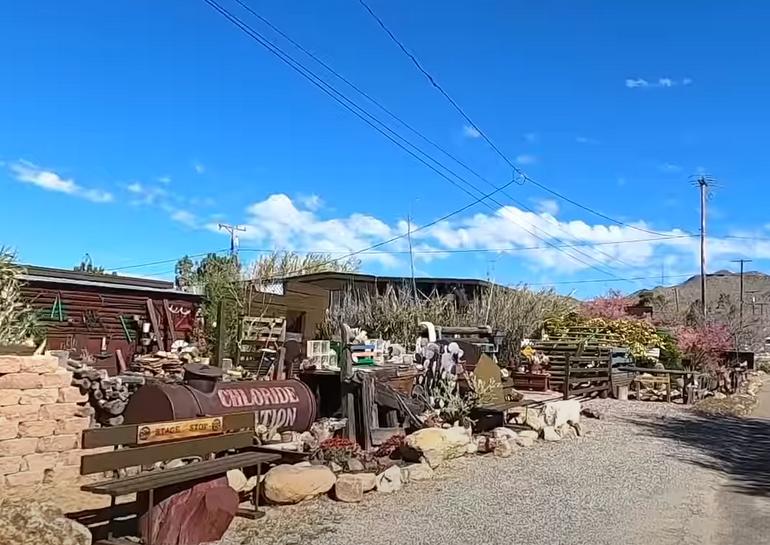
Junkyard Art Meets 1860s Silver Fever (Chloride)
Chloride is one of Arizona’s oldest silver-mining camps, founded in the 1860s and never fully dying despite booms and busts. It survived as a small desert community while embracing quirky modern folk art, junk sculptures, and mock gunfights that playfully nod to its rowdy Old West roots.
- Location and Access: 20 miles northwest of Kingman off US-93.
- Highlights: Mock gunfighter town, junk-art graveyard, rock murals.
- Why It Stands Out: Quirky desert folk art meets Old West history.
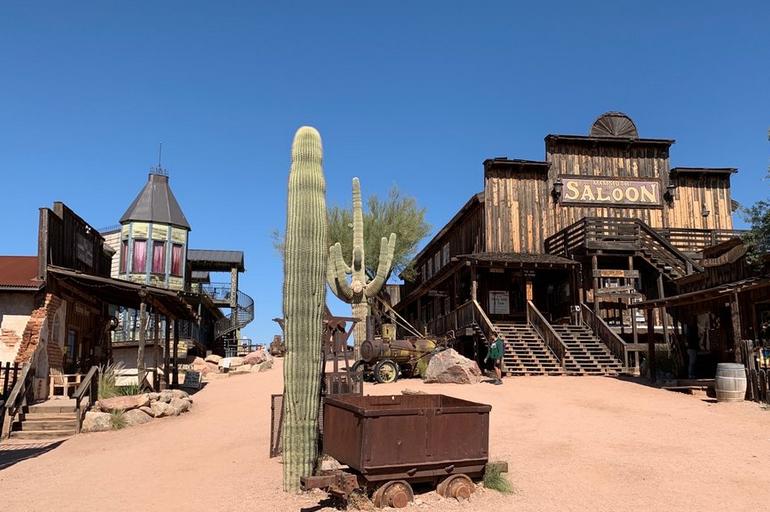
The Ghost Town That Refused to Stay Dead (Goldfield)
Goldfield boomed in the 1890s with gold discoveries that drew thousands, but it burned badly and faded; in the late 20th century, enthusiasts rebuilt it as a tourist attraction with a narrow-gauge railroad, mine tours, and gunfight reenactments that keep the Wild West spirit alive for families.
- Location and Access: 45 minutes east of Phoenix via US-60.
- Highlights: Arizona’s only running narrow-gauge railroad, thrilling gunfight reenactments, and mine tours.
- Why It Stands Out: The most family-friendly, fully restored Wild West town in Arizona. Website.
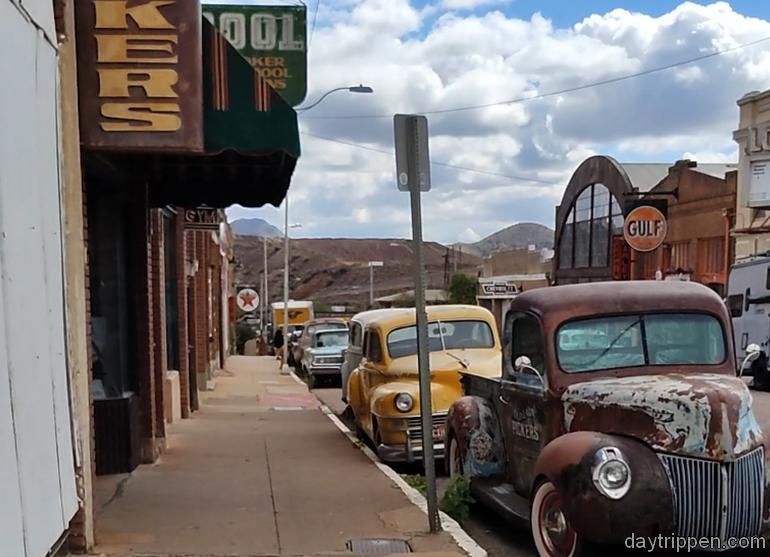
A 1950s Mining Street Trapped in Amber (Lowell)
Lowell developed as a company-owned copper-mining town tied to the larger Bisbee operations, thriving through the mid-20th century until the 1970s, when mining declined sharply, and much of the area was abandoned or relocated. The main street was left eerily preserved, with its vintage cars and mid-century storefronts, creating a time capsule feel within Bisbee’s city limits.
- Location and Access: Inside Bisbee city limits, just up the hill from downtown.
- Highlights: Perfectly preserved 1950s street frozen in time with vintage cars.
- Why It Stands Out: Feels like stepping onto the set of a 1950s movie.
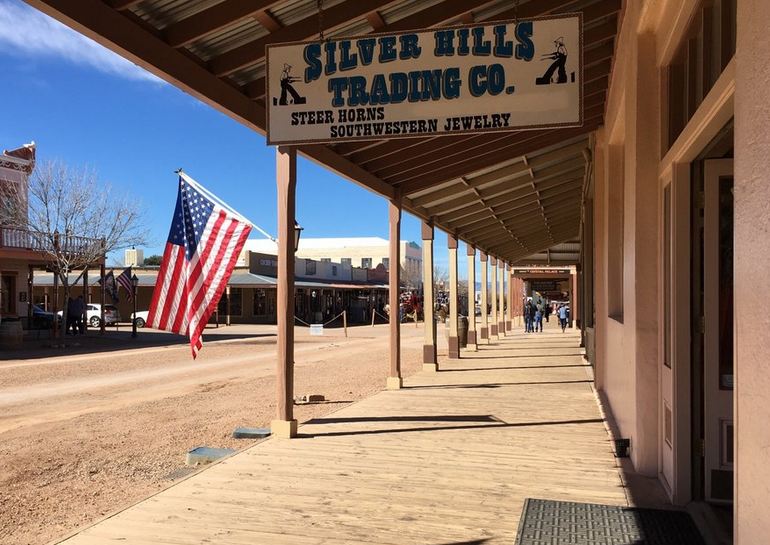
The Town Too Tough to Die (And Still Cashing In on It) (Tombstone)
Tombstone was founded in 1879 after silver was discovered, and it exploded into a legendary boomtown of 10,000+ people known for saloons, outlaws, and the infamous 1881 Gunfight at the O.K. Corral involving Wyatt Earp and Doc Holliday. The silver played out in the 1880s–1890s, and fires ravaged parts of town, but it earned the nickname “The Town Too Tough to Die” and has thrived ever since on tourism, reenactments, and its Boot Hill cemetery.
- Location and Access: 70 miles southeast of Tucson via I-10 and AZ-80.
- Highlights: O.K. Corral reenactment, Boothill Graveyard, Bird Cage Theatre.
- Why It Stands Out: “The Town Too Tough to Die”—the most legendary Wild West town still kicking. Website.
Final Thoughts: Get Out There Before They Vanish Again
These Nevada and Arizona ghost towns aren’t just crumbling buildings—they’re open-air museums of the American Dream gone bust. Some are perfectly preserved, some are living on borrowed time, and a few have clawed their way back from the grave as tourist attractions. Whether you want eerie silence or staged gunfights and cold beers, the desert is waiting. Pack plenty of water, respect the ruins, and go chase some ghosts. The Wild West isn’t completely dead—it’s just taking a very long nap. Want more Ghost Towns? Visit the California Ghost Town Page.
Discover more from Daytrippen.com
Subscribe to get the latest posts sent to your email.