Visiting Randsburg: Historic Mining Town in the Mojave Desert
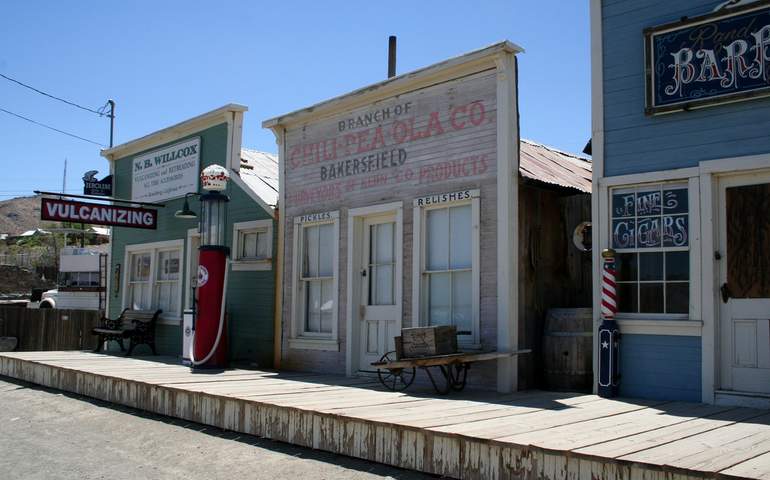
Randsburg, California, offers a raw slice of Old West mining history in the high Mojave Desert. Located just off Highway 395 in eastern Kern County at about 3,500 feet elevation, this living ghost town once boomed with nearly 3,000 residents during the 1890s gold rush. Today, around 100 people call it home, preserving weathered buildings, artifacts, and a gritty frontier vibe that draws history enthusiasts, off-roaders, and curious travelers.
Stroll Butte Avenue to discover rusted mining equipment, quirky signs, a tiny historic jail, and faded structures that echo the town’s rowdy past. It’s an authentic high-desert stop for a day trip focused on California’s mining heritage.
Step Back into Gold Rush Glory
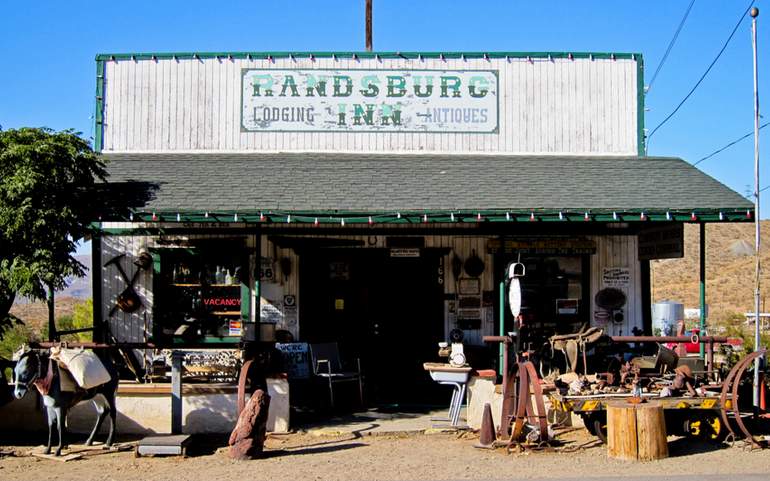
The 1895 discovery of gold by prospectors Frederic Mooers, John Singleton, and Charles Burcham sparked the rush. They found rich ore at what became the Yellow Aster Mine (initially called Olympus), named after the Rand mining district in South Africa. The area quickly transformed from a tent camp called Rand Camp into a bustling town with saloons, stores, and mills. By the late 1890s, Randsburg swelled to over 3,000–3,500 people and produced significant gold output—estimates suggest the broader Rand District yielded around 1 million ounces total through the early 20th century, with the Yellow Aster alone contributing hundreds of thousands.
Fires repeatedly ravaged the wooden structures, and production fluctuated with economic shifts and ore quality. The district also saw tungsten and silver booms (notably the Kelly Mine). Large-scale operations slowed after World War I, but intermittent mining continued. Randsburg survived as a “living ghost town,” with residents maintaining its character amid the desert landscape.
Randsburg’s Quirky Relics and Desert Charm
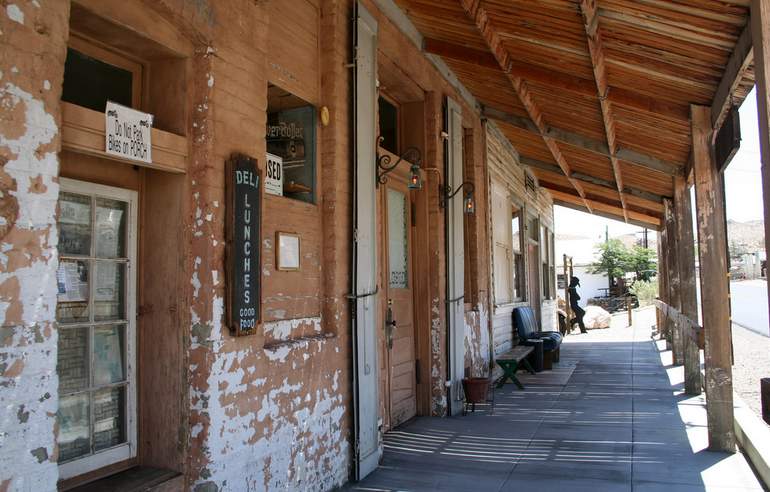
Wander the main drag to soak up the atmosphere. Antique shops, a general store, small inns, and quirky monuments line the streets. Look for bumper stickers proclaiming “Where the hell is Randsburg?” and hand-painted outhouse signs that add local humor. Scattered rusted vehicles and mining relics fill empty lots, creating a photogenic, time-capsule feel.
Fuel Up at Randsburg’s Historic Bar “The Joint”
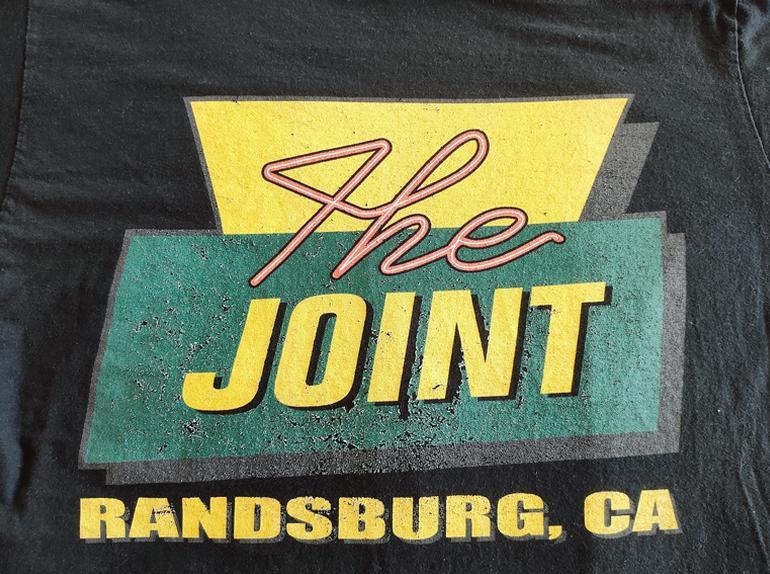
The infamous “Joint” bar lets travelers wet their whistles at the ultimate hole-in-the-wall with its Mason jar lamps lighting the outside facade. The Joint attracts offroad bikers, ATVs, and history buffs. The Joint was built in the early 1900s and has been in his family-owned since the mid-1950s. Grab a drink, order a burger, and relax in a living Ghost in the middle of the beautiful Mojave desert. Don’t forget to pick up a “Joint” T-shirt while visiting Randsburk. You can find the Joint at 165 Butte Ave, Randsburg, California. Open Thursday through Sunday.
Dig into the Mining Past at The Rand Desert Museum
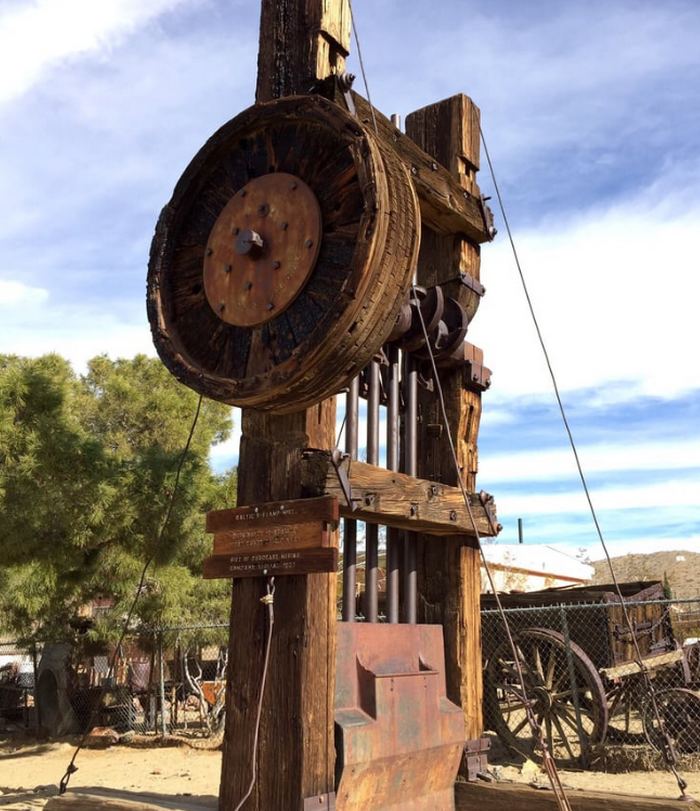
Historical Marker No. 938, located nearby, designates The Rand Desert Museum as one of the first museums established in Kern County in 1942. The museum houses various unique artifacts, such as an extensive mineral collection, a stamp mill, an antique miner’s toilet known as a “HoneyPot,” and old photographs of Randsburg and the surrounding area. Additionally, the museum showcases equipment that was used in the local mines. Outside, you can find a collection of old, rusty mining machinery, including a 5-ton Steam Locomotive used in the Yellow Aster Mine in the early 1900s. Rand Museum Website.
Climate and When to Visit
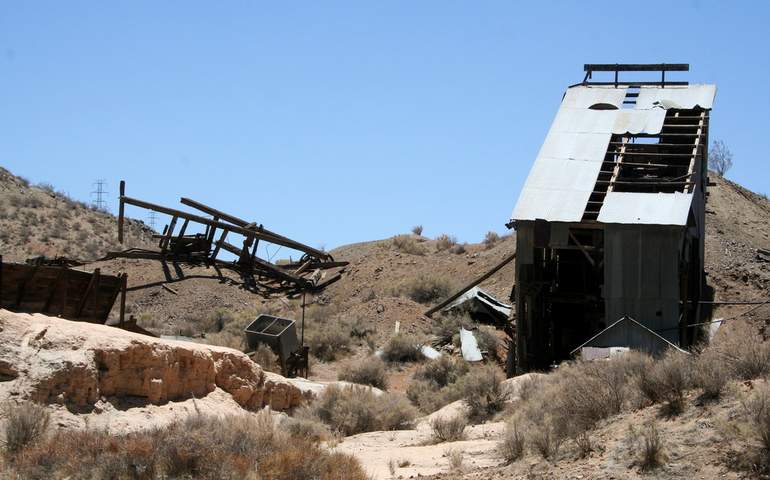
Expect typical high-desert conditions: scorching summers (highs near 110°F) and cold winters (lows to 10°F) with possible light snow. Spring and fall offer the most comfortable temperatures for exploring outdoors. Weekends tend to be livelier with visitors.
The area supports kit foxes, jackrabbits, cottontails, hawks, eagles, coyotes, and summer visitors like Costa’s hummingbirds. Desert tortoises live in protected nearby zones—observe from a distance and follow Leave No Trace principles.
Getting To Ransburg
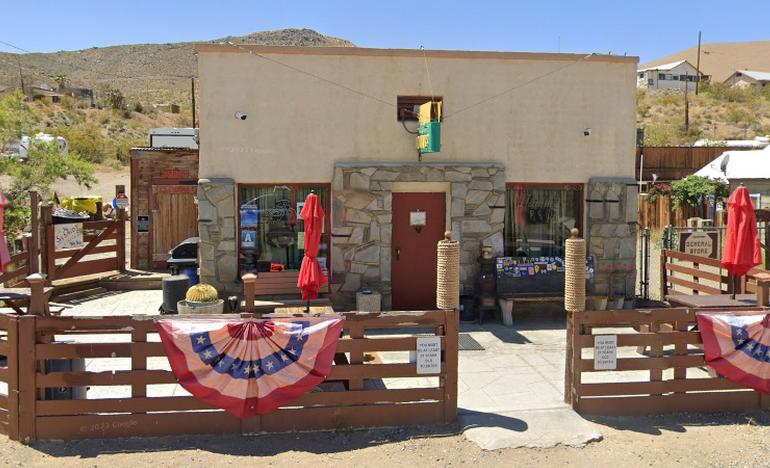
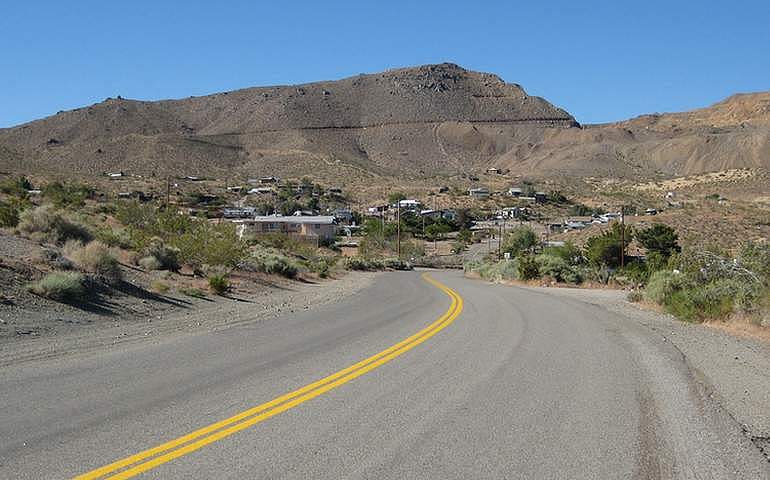
Randsburg is west of U.S. Route 395, between Kramer Junction to the south and Ridgecrest to the north. In addition to the two inns in town, motels are in nearby Ridgecrest, and some campgrounds, including Walker Pass Campground and Red Rock Canyon State Park, are within a short driving distance. Please note that the Randsburg General Store has relocated from its old building on the street to a new location called THE VAULT. The new address is 161 Butte Ave, Randsburg, California.
Nearby Points of Interest
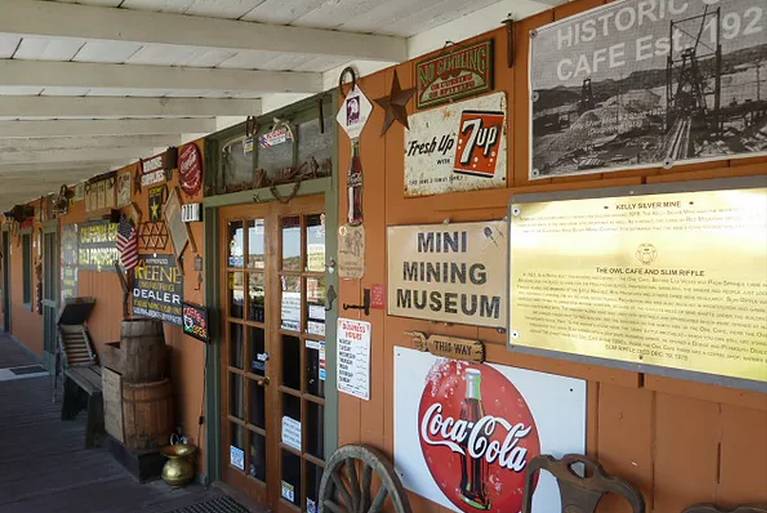
Red Mountain Owl Cafe Museum (a few miles south on Highway 395): This historic spot (formerly a cafe/hotel from the 1920s) now functions as a mining museum with artifacts, photos, and prospecting supplies/equipment. It has ties to Hollywood visitors during its heyday. Call ahead to confirm current hours before visiting. Website.
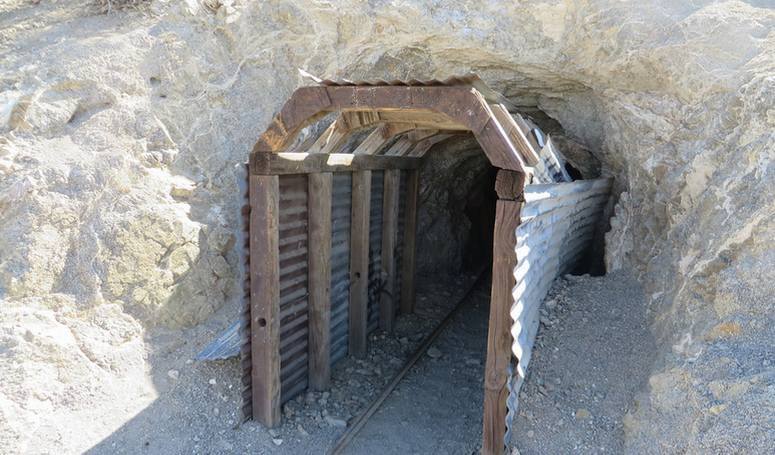
Burro Schmidt Tunnel: About 30–40 minutes away via dirt roads, with high clearance recommended, this remarkable half-mile, hand-dug tunnel through Copper Mountain was excavated single-handedly by William “Burro” Schmidt over 32+ years, starting around 1906, as an intended ore shortcut. Explore the site, cabins, and views; bring flashlights if entering and check BLM for access before you go.
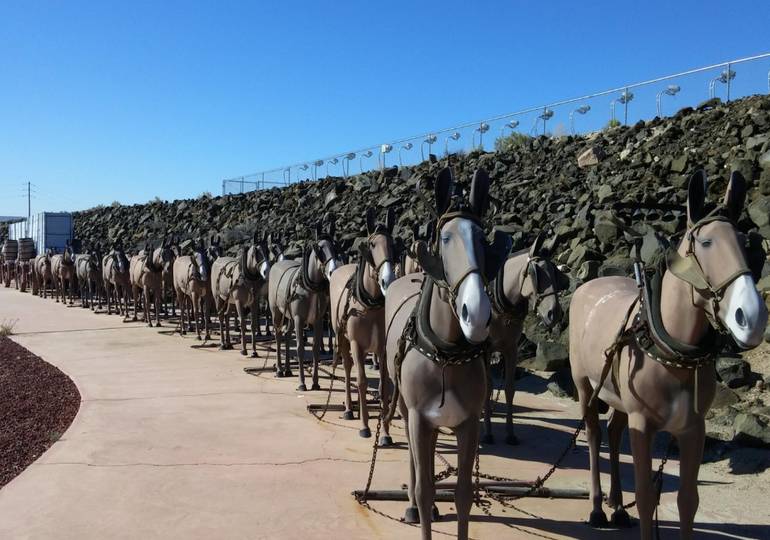
Borax Visitor Center (Boron, CA): The Borax Visitor Center is in Boron, California, in the Mojave Desert. It sits atop a massive pile of materials extracted from the borax mine pit. From the visitor center, you can enjoy a panoramic view of the Rio Tinto Borax processing plant and the largest open-pit mine in California. As you enter the visitor center, you will be greeted by a full-size replica of a 20-mule team with a wagon. Borax was originally transported from deposits in Death Valley to processing plants via a 20-mule team pulling a wagon of ore.
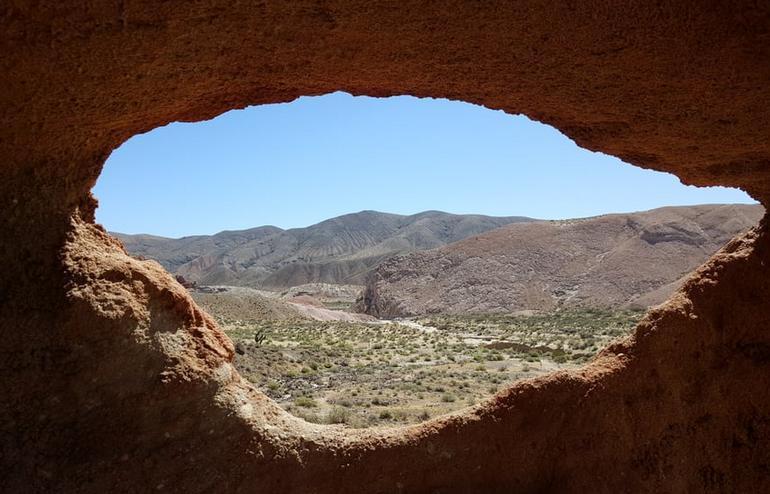
Red Rock Canyon State Park: Red Rock Canyon State Park covers an area of nine square miles in the middle of the Mojave Desert, along both sides of California Highway 14. The park is known for its scenic desert cliffs, buttes, and multicolored rocky outcrops resembling the mysterious landscape of a distant planet. This area was once a crossroads of an indigenous trade route and home to gold and silver miners who flocked there in search of the mother lode in the mid-1800s.
Why Visit Randsburg
Randsburg offers an unpolished, immersive look at California’s mining past amid the stark beauty of the Mojave Desert. Whether grabbing a drink at The Joint, browsing museum exhibits, or venturing to nearby tunnels and parks, this living ghost town rewards those seeking authentic history and high-desert adventure. Check current conditions, confirm hours, and support local spots for a memorable day trip. Safe travels—keep an eye out for those quirky signs and desert ghosts. If you go, take your time and enjoy the town’s rugged character before heading back out into the desert.
California’s Best Ghost Towns: Echoes of the Gold Rush and Beyond
Discover more from Daytrippen.com
Subscribe to get the latest posts sent to your email.
In from Westminster love Ransburg with family dirt biking . Go around town later to see the sites.
If you are interested in visiting Burro Schmidt’s mine using a dirt bike, it is easily doable from Randsburg. Just make sure you have enough gas to make the round trip. And not to be alarmist, but there are still open mines all over the place in the surrounding desert, some of them just in the middle of nowhere so use some caution when riding in the open desert. Most of the obvious ones are fenced or plugged but California still has thousands of unmarked and open mine shafts that go straight down.
From my understanding the current town laws prohibit riding a non-plated bike through town, so you may have to coast your bike down the street until you hit the desert.